There is a very specific kind of terror that only writers know. No, it’s not the blank page or the deadline. It’s not even the moment you hit send on your script. It’s the table read, aka the moment real human beings sit down, open your script, and start reading it aloud.
Suddenly your clever dialogue has lungs, your pacing has a pulse, and your jokes either land or echo into the void. This, my friend, is the table read, the first time your script stops being theoretical and starts being performative.
It doesn’t matter if you’re writing a feature film, a TV pilot, a short, or even a staged reading, the table read is one of the most powerful tools in the writing process. It’s where assumptions go to die and you start to see your script for what it really is. It’s also where good scripts get better, and weak ones finally reveal why they aren’t working.
In today’s blog, we’ll be dusting off the cobwebs off the table read, examining why it matters, how to run one like a pro, and what to do with the avalanche of information you’ll have afterwards.
So, let’s go!

What Is a Table Read?
A table read is a live, read-through of a script performed aloud usually by actors, while everyone sits around a table (or a virtual equivalent).
There are no costumes, no blocking, no sets, and no dramatic lighting cues. Just voices, pages, and the story itself.
A table read’s goal isn’t a polished performance but a chance for you to listen to what works, what doesn’t, and most importantly, why?
The Critical Purpose of the Table Read
A table read exists to answer questions your brain can’t answer on its own. And we all need a little helping hand sometimes.
When you read silently, your mind smooths over problems. You imagine perfect pacing, jokes landing exactly as intended, and subconsciously fix clunky dialogue without realizing you’re doing it.
Actors won’t do that. Instead, they’ll read what’s on the page and that honesty is the whole point.
So, what does a table read expose?
1. Pacing
Scenes that felt right on the page suddenly drag. Pages you thought were breezy take five full minutes to get through.
2. Dialogue
Lines that looked sharp become awkward to say. Characters start sounding suspiciously similar, and jokes either soar or die a quiet, painful death.
3. Structure
Act breaks full mushy and emotional turns arrive too early or too late. Stakes disappear where you swore they existed.
In short, a table read is where the script stops being yours and starts becoming the audience’s. It’s scary, yes, but it’s also extremely exciting!
Table Read Examples in Film and TV
Now, table reads aren’t just for beginners. They’re also baked into professional storytelling at the highest level, and some of the most successful films and TV shows owe major creative breakthroughs to what happened around a table.
Television Table Reads
In TV comedy, table reads are sacred. Shows like Parks and Recreation, Brooklyn Nine-Nine, and 30 Rock famously rewrote jokes during the table read itself. If a joke didn’t land with a room full of professional writers and actors, it didn’t survive to production. Entire punchlines were swapped out on the spot, and sometimes even whole scenes.
On The Big Bang Theory, producers paid close attention to where the studio audience laughed (or didn’t!) during table reads and rehearsals. Lines that technically worked on the page, but stalled momentum were cut or reworked, helping the show maintain its precise comedic rhythm.

Film Table Reads
Film productions often use table reads to identify tonal problems, especially in ensemble pieces.
During early table reads for Little Miss Sunshine, the filmmakers discovered that certain scenes leaned too dark too fast. Hearing the script aloud helped them rebalance humor and heart, preserving the film’s emotional accessibility.
Similarly, Get Out benefited from table reads where Jordan Peele listened closely to how tension and humor played off each other. Lines that felt funny on the page but undercut dread were trimmed, sharpening the film’s psychological edge.
The rise of streaming also lets us into the writers’ room and into the table read with shows from Stranger Things to Family Guy showcasing just how a table read flows to their audiences:
Iconic Actor Rewrites
Some of the most famous rewrites in history began with a simple pause.
Iron Man (2008)
During a table read for Iron Man, Robert Downey Jr. questioned dialogue that felt overly rigid and expositional. Those conversations helped push the film toward a looser, more improvisational tone, one that ultimately defined the voice of an entire cinematic universe.
The West Wing (1999-2006)
Aaron Sorkin has often spoken about actors flagging moments in The West Wing where motivations felt unclear. Those questions forced rewrites that clarified character intent and strengthened emotional logic.
If there’s one thing you can take from these examples, is that if an actor pauses and says, “I don’t understand why I say this,” the audience will feel that confusion ten times over.
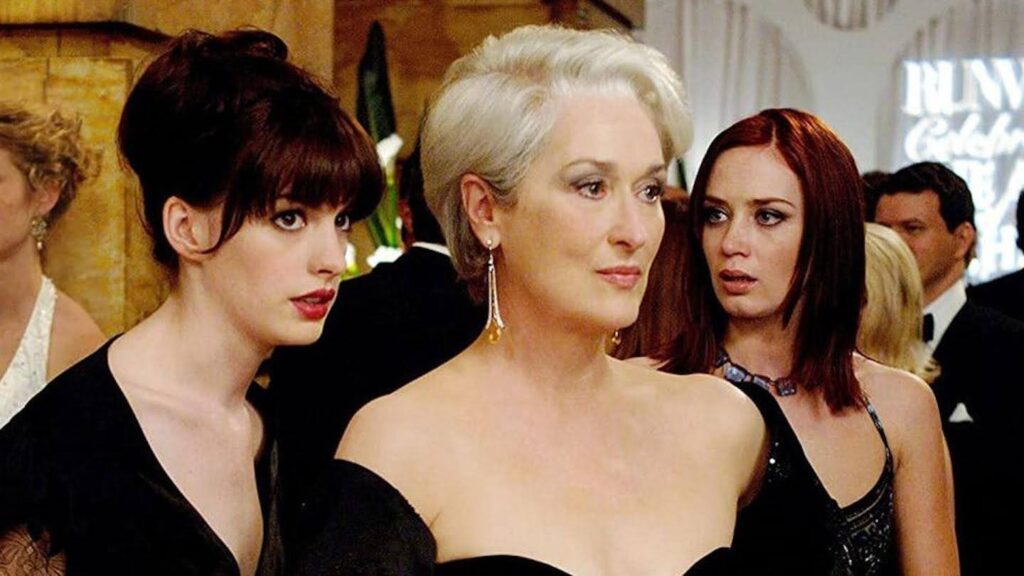
The Devil Wears Prada (2006)
During table reads for The Devil Wears Prada, actors, particularly Meryl Streep, flagged dialogue that felt too overt or traditionally villainous. Those conversations led to rewrites that stripped away explanation and volume, allowing Miranda Priestly’s authority to come from restraint and precision.
The cerulean sweater scene, refined through this process, evolved from functional exposition into a sharp, effortless power move; proof that hearing dialogue aloud can reveal when less truly is more.
How to Prepare for and Run a Table Read
A great table read doesn’t happen by accident. Preparation determines whether you walk away with useful insight or vague emotional whiplash.
How to prep for and run a table read
- Before the Read (with Celtx)
Before anyone reads a word aloud, your logistics matter. Using a platform like Celtx makes this dramatically easier.
– First, share the final draft electronically through Celtx’s cloud platform
– Next, ensure everyone has the same, correctly formatted version
– Eliminate confusion about revisions, page numbers, and scene order
If someone shows up with an old draft, the read is already compromised. Control the variables you can.
And when it comes to assembling your readers, also consider:
– Casting readers who can read clearly and commit emotionally (they don’t need to be famous, just engaged in telling a good story)
– Scheduling enough time so no one feels rushed
– Decide in advance who is running the session (it doesn’t need to be you as the writer) - During the Read
This is where many writers accidentally sabotage themselves.
Firstly, at the table read, you’re not the director. Here, your job is to listen.
So, how do you run your table read smoothly?
– Assign one person to run the clock and track the page count, confirming the classic one minute per page rule.
– Assign a separate note-taker (someone who isn’t you).
– Ask readers to read straight through without stopping unless something is truly unclear.
It may be tempting, but don’t interrupt the read to explain lines, justify choices or workshop mid-read. Every instinct you have to defend the script is data telling you where the script needs help.
Instead, as you listen, pay attention to where the energy dips, where readers stumble, and where laughter, silence, or confusion occur. The room’s reactions are gold, and you don’t want to miss them! - Post-Read
This is where professionals separate themselves from the hobbyists. Once the table read has wrapped up:
– Thank the actors out loud and sincerely.
– Ask for general impressions first, not line edits.
– Collect notes without debate.
Later that day or at a later date, make sure to send a follow-up email reiterating your thanks. Also share a summary of key findings, patterns and recurring issues that were voiced by your actors. And for yourself, open a new revision cycle in Celtx (other screenwriting software is available).
The key here is that momentum matters. A table read quickly loses its value if you don’t act on it while the insights are fresh.
Common Mistakes to Avoid with Table Reads
Even experienced writers make mistakes, and each one quietly undermines the entire purpose of a table read. Avoiding them can mean the difference between a productive breakthrough and a frustrating, inconclusive experience.
Directing the Actors
This is the most common, and most damaging, mistake. A table read is not rehearsal. The moment you say, “Can you try that line like this?” you’re no longer learning how the script works on its own.
If a line only works when you explain how it should be read, the line isn’t finished yet. Actors should be able to understand intention, tone, and rhythm directly from the page. Let them read it straight. Any confusion you feel is valuable data.
Explaining or Defending the Script Mid-Read
When something doesn’t land, writers often rush to clarify: “What I meant there was…” Resist that urge.
If you have to explain it, the audience will need it explained too, and they won’t be sitting next to you in a theater. Silence, confusion, or hesitation during the read is feedback. Don’t erase it by talking over it.
Not Taking (or Organizing) Notes
I can guarantee that you will forget things. It could be laughter that surprised you, a scene that dragged or a line that consistently tripped people up. Without notes, those moments vanish the second the room clears.
Have a designated note-taker, and immediately after the read, organize notes into categories like pacing, character, dialogue, and structure. Raw notes are useful while structured notes are actionable.
Stopping Too Often
Pausing after every scene to discuss details kills momentum and distorts your sense of pacing.
The power of a table read is experiencing the story as a continuous flow. Save detailed discussion for the end. If something truly breaks comprehension, make a quick note and move on.
Overvaluing a Single Opinion
One person’s feedback, even from someone brilliant, shouldn’t override the room.
Look for patterns. If multiple people stumble in the same scene or react similarly to a character choice, that’s a signal. Lone opinions are worth considering, but trends are what drive smart rewrites.
Ignoring Emotional Reactions
Writers love intellectual notes: logic, plot, mechanics. But your emotional responses matter just as much.
Did you feel bored? Defensive? Embarrassed? Proud? Those reactions often point directly to the script’s weakest or strongest moments. Embrace the discomfort as it will guide you in the right direction.

Treating the Table Read as a Pass/Fail Test
A table read is not a verdict on your talent. It’s a diagnostic tool.
Strong scripts still have rough reads. Weak reads don’t mean the script is doomed; they mean it’s finally telling you the truth. Growth happens when you treat the table read as part of the process.
Still worried about receiving feedback? WeScreenplay takes us through How to Process Feedback.
FAQs about Table Reads
No. You need committed readers who can read clearly and stay engaged.
If everyone consents, yes. Listening back can reveal things you missed.
As soon as the script is coherent from start to finish. Don’t wait for perfection.
Absolutely. Video calls and shared scripts work well, just be extra clear about roles and pacing.
Conclusion
A table read isn’t a judgment or a verdict on your talent, your future, or your worth as a writer. Think of it as a mirror that shows you what the script actually is, not what you hope it might be. And that honesty is a gift.
Writers who embrace table reads grow faster. Their scripts sharpen sooner. Their revisions get smarter. They stop guessing and start knowing.
So go gather some voices, share the draft, sit quietly, and listen carefully; your script is about to tell you the truth.
Focus on your story, not your formatting.
Let Celtx’s Script Editor automatically apply all industry rules while you focus on the story.
Up Next:

Script Revision Colors Explained
After a table read, revisions start fast. Learn how revision colors work and why they’re essential for keeping collaborators on the same page.