Every TV show you’ve ever loved started with one high-pressure piece of storytelling: the pilot episode. Before the fandoms, before the memes, and before the network notes and cancellation threats, there was a single episode trying to answer one brutal question: is this show worth making more of?
A TV show’s pilot is a proof of concept, a tone-setter, a character manifesto, and especially in today’s streaming era, a business pitch disguised as entertainment. It has to introduce a world, hook an audience, and demonstrate longevity, all while feeling effortless. No pressure, then?
Whether you’re a screenwriter, film student, or curious viewer who keeps hearing the word ‘pilot’, today’s blog breaks down what a pilot episode really is, why it exists, how it’s structured, and how streaming has completely changed the game.
Let’s start at the beginning…
Table of Contents

What Is a Pilot Episode/TV Pilot
A TV pilot is the first episode of a television series, created to sell the show concept and demonstrate how the series will work on an ongoing basis. At its core, a pilot must do three things:
- Introduce the world
- Introduce the characters
- Prove the show has legs
Unlike a feature film, which aims for emotional closure, a pilot is intentionally incomplete. It opens doors instead of closing them and asks questions rather than answering all of them.
Think of a pilot episode as a promise: “If you keep watching, this is the kind of story you’ll get.”
Historically, pilots were produced to convince networks to order a full season. Today, even when a show is straight-to-series, the pilot still functions as the foundation for everything that follows creatively, structurally, and tonally.
Why Is a TV Show’s First Episode Called a “Pilot”?
The term ‘pilot’ comes from aviation. In early radio and television, a pilot was essentially a test flight and trial run to see if a show could ‘fly’ with audiences before committing serious resources.
Just like an aircraft pilot, the pilot episode tests the controls, reveals mechanical flaws, and shows whether the vehicle is airworthy. If the pilot failed, the show never left the ground.
Don’t get me wrong, that mindset does still exist today, even in the streaming era. Executive, algorithms, and audiences are still silently asking if a series can sustain altitude.
The Anatomy of a Pilot Episode vs. Feature Films
One of the biggest mistakes new writers make is treating a pilot like a mini movie. It’s not. While pilots and feature films share tools (three acts, character arcs, inciting incidents), their goals are fundamentally different.
Let’s break them down.
Feature Film Structure
A feature film is designed to:
- Tell a complete story
- Resolve its central conflict
- Deliver emotional catharsis
- End with change
A protagonist starts one way and ends another. The journey is the point.
Want a deeper dive? What is a Feature Film? Your Guide to the Industry Standard
Pilot Episode Structure
On the other hand, a pilot is designed to:
- Launch a repeating story engine
- Establish ongoing conflict
- Introduce long-term character dynamics
- End with continuity instead of closure
Instead of asking how a story ends, a pilot asks why the story keeps happening. The ending of a strong pilot doesn’t feel final, but locked into motion, ready to spring.
How Streaming Has Changed the Pilot Episode Model
The rise of streaming has dramatically changed how pilots are written and produced. In the network era, pilots were often standalone episodes created before any other scripts existed. Writers poured everything into one hour, hoping for a pickup.
Now, many shows are developed in mini-rooms, small writers’ rooms hired to break an entire season before the pilot is finalized. This has two major effects.
1. Pilots are more serialized
Writers know where the season is going, so pilots often plant long-term arcs immediately.
2. The Pilot must hook faster
Streaming audiences decide whether to keep watching within minutes, not episodes.
The modern pilot isn’t just selling a show but competing with everything else in our algorithms. It’s a dog-eat-dog world out there.
How to Write a TV Pilot
Okay, so let’s talk craft.
While pilots vary by genre, budget, and format, great pilots consistently nail three critical elements: the teaser, the inciting incident, and the series engine.
- The Teaser/Cold Open
The teaser (or cold open) is your first impression, and in the streaming era, it’s everything. Your opening sequence should:
– Drop us immediately into action
– Establish tone and genre
– Introduce the central dilemma or promise
You don’t have time to warm up nor get bonus points for subtlety here. How do you hit the ground running? Well, learn from the best.
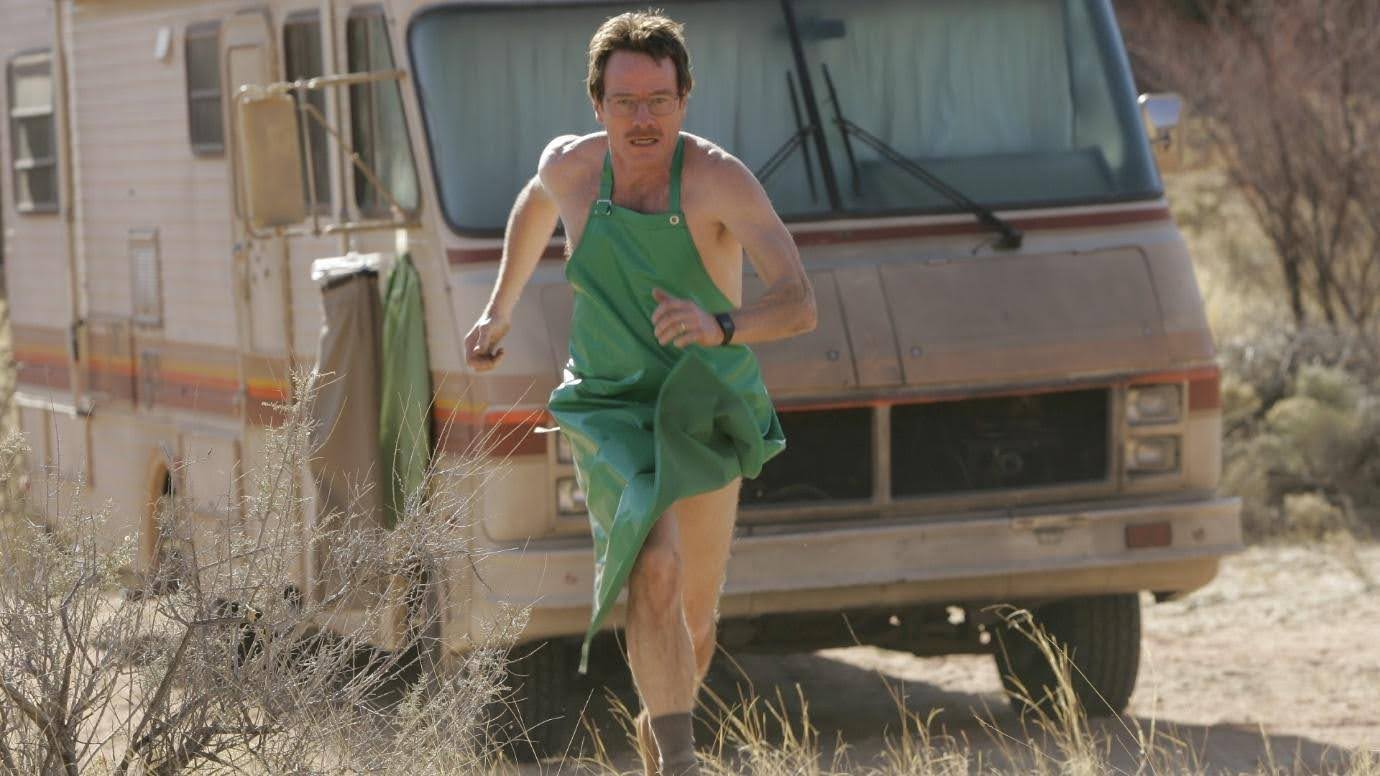
For example, Breaking Bad opens with a man in his underwear driving an RV through the desert with dead bodies inside, Grey’s Anatomy opens with sex and a hangover before a hospital shift, and The Walking Dead opens with a child zombie.
These opening scenes don’t explain everything but declare the show, giving us an insight into what’s in store.
And for your own pilot ask yourself this: If someone watched my teaser, would they know what kind of ride this is? - Introduce the Protagonist in Action
Your main character shouldn’t be introduced through description but revealed through behavior. Early scenes should show how they solve their problems, what they want vs. what they need and their flaws under pressure.
Pilots are like auditions for characters. The audience needs to understand who this person is when something goes wrong. Because that’s the version we’ll be watching every week.
If your protagonist is passive in the first act, that’s a warning sign. - The Inciting Incident
The inciting incident is the event that disrupts the protagonist’s normal life and launches the series. This moment should:
– Force a choice
– Introduce the main conflict
– Be irreversible
Importantly, the inciting incident in a pilot doesn’t just affect one episode, but the entire series. Just as Walter White’s cancer diagnosis affects the entire story arc.
Other examples include a body washing up on a beach, a family moving into a haunted house, or a character discovering a secret they can’t unlearn.
The inciting incident is the ‘before and after’ line. Everything that follows is a consequence. - Establish the World and Rules
Every series has a rule, whether it’s emotional, moral, or literal. A pilot must quietly teach the audience how this word operates, what’s normal here, and what’s dangerous, forbidden, or rare.
Now, this doesn’t mean exposition dumps but demonstration. We learn the rules by watching characters navigate them and sometimes break them. The clearer the rules, the more compelling the drama when they’re tested. - Introduce the Ensemble
If your show has multiple main characters, the pilot must introduce them efficiently. This doesn’t mean equal screen time. Instead, each character should serve a clear function in the story engine, reflect or challenge the protagonist, and feel distinct in voice and desire.
If two characters could be merged without changing the story, one of them probably shouldn’t be there yet. - Define the Central Question of the Series
Every successful pilot poses a question that can’t be answered quickly. For example:
– Will they get away with it?
– Can this relationship survive?
– Will the truth come out?
– Can this person change or will they get worse?
This question should live beneath every plotline and character choice. Even when episodes vary, the central question remains. And if you can’t articulate your show’s core question in one sentence, the pilot will feel unfocused. - The Series Engine
The series engine is the most important (and most misunderstood) part of a pilot. It’s the ongoing problem that generates episode after episode of story. It answers the question, what keeps this show going?
By the final scenes of your pilot, your audience should understand:
– The characters’ new status quo
– The conflict that will not be easily resolved
– Why next week’s episode exists
A strong series engine should feel inevitable, like:
– A lawyer who keeps defending criminals
– A doctor working impossible cases
– A family trapped in a toxic dynamic
– A hero who must balance two identities
If your pilot ends by solving the main problem, you don’t have a series, but a short film!

3 Common Mistakes in Pilot Episode Writing
Even strong writers can stumble on pilots. Here are some of the biggest traps you can avoid!
1. Trying to Cram Too Much Story
Pilots don’t need to explain everything. In fact, they shouldn’t. Overloading your script with too much backstory, multiple timelines, and too many plotlines dilutes your core story promise.
For pilot episodes, it’s much better to be clear than too complex.
2. Too Many Flashbacks
Yes, flashbacks can be powerful but, in a pilot, they often signal insecurity. If your story requires constant flashbacks to be interesting, the present-day engine may not be strong enough yet. Establish the now first and earn the past later.
3. Ending with Closure
This one kills more pilots than anything else. If your pilot wraps up neatly, executives and audiences subconsciously think “Cool, that’s done.”
Make sure to leave threads dangling, tension unresolved, and characters mid-problem. It’s not sloppy writing, it’s just television!
And for more on what not to do when writing your TV pilot, check out this awesome video from screenwriter James A. Hurst:
FAQ about TV Pilots
No. Many streaming shows are ordered straight-to-series, but the pilot script still functions as the blueprint for the entire season.
Typically, a half-hour pilot is 22–35 pages, with an hour-long pilot around 50–65 pages. But streaming has loosened these rules slightly. For up-to-date rules and minimums, the best place to go is the Writers Guild of America for their Pilot Deal Guide.
Not always. Emotional momentum matters more than shock value. The ending should compel continuation, not just surprise.
Absolutely. Many famous pilots were reworked, reshot, or restructured once the show moved forward.
Conclusion
A pilot episode is the argument for why the story deserves to exist. It introduces a world, ignites conflict, and locks characters into a problem they can’t escape. In the streaming era, it must do all of that faster, clearer, and with more confidence than ever before.
If you remember one thing, make it this: A great pilot doesn’t end. It launches, sending characters and audiences hurtling forward, asking the same irresistible question: What happens next? And that question is the lifeblood of television.
Focus on your story, not your formatting.
Let Celtx’s Script Editor automatically apply all industry rules while you focus on the story.
Up Next:

How to Write a TV Show Script (A True Beginner’s Guide)
Once the pilot is written, the real work begins. This guide walks through TV script structure, episode flow, and what writers need to think about when building a series beyond episode one.