Every time you sit down to write a scene, you aren’t just choosing what happens — you’re choosing who the audience is “hanging out” with. POV meaning Point of View, goes far beyond where you put the camera; it is the emotional filter through which your entire story is told.
Choose the right POV, and your audience is locked in for an intimate, heart-pounding ride. Choose the wrong one, and they’ll feel like they’re watching your characters through a telescope from a mile away. Let’s break down the different types of POV so you can choose the best lens for your script.
What is POV? (The “Eyes” of the Story)
In the simplest terms, POV (Point of View) refers to the perspective from which a story is told. It determines how much information the audience has at any given time. If your protagonist is the only one in the room, we only know what they know. If you’re using an “all-knowing” perspective, the audience might see the killer hiding in the closet before the hero even opens the door.
In screenwriting, POV is your primary tool for creating suspense, empathy, and dramatic irony.
First-Person POV: The Intimate Narrator
First-person POV is as close as you can get to a character’s psyche. This is the “I” perspective. In film, this is almost always handled through Voiceover (V.O.). It creates an immediate, unbreakable bond with the protagonist. We hear their secrets, their lies, and their internal struggles. However, you are effectively “trapped” in their head; if your protagonist doesn’t know a secret is being kept, the audience can’t see it either. This makes it perfect for mysteries or psychological dramas where the “truth” is subjective.
Second-Person POV: Breaking the Fourth Wall
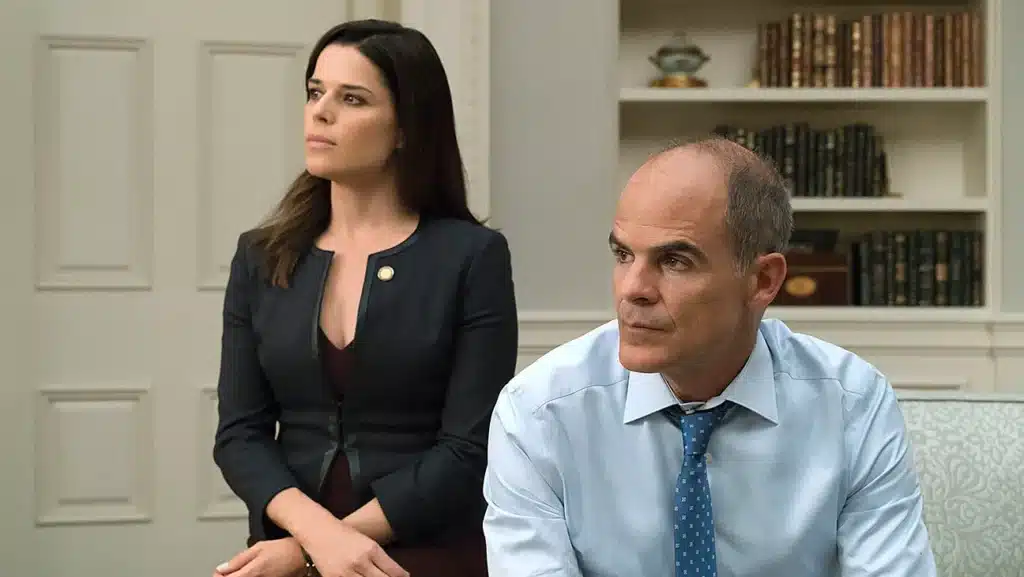
Second-person POV (the “You”) is the rarest bird in the screenwriting jungle. This occurs when the character acknowledges the audience directly, essentially making the viewer a character in the story. Shows like Fleabag or House of Cards use this to make the audience an “accomplice.” When a character looks at the camera, they are inviting you into their world, often to share a joke or a justification that no one else on screen is privy to.
Third-Person POV: Limited vs. Omniscient
Third Person POV is the bread and butter of most Hollywood scripts.
In Third-Person Limited, the camera follows one person at a time, and we only see what they see. If the scene switches to another character, we switch to their limited perspective.
Conversely, Third-Person Omniscient is the “God” perspective. The narrator or the camera knows everything about everyone. This is common in epic fantasies or satirical films where an outside voice comments on the state of the world.
How POV Choice Changes Your Screenplay’s Tone
Your choice of perspective dictates the “flavor” of the tension. It’s the difference between the audience feeling like an outside observer or a trapped participant. To see this in action, let’s look at how the same horror scene changes based on the POV you choose:
Third-Person Omniscient: The God’s Eye View
In this perspective, the camera and the narrator know everything. We see the monster in the basement, the girl in the kitchen, and the broken phone line all at once.
- The Tone: Dread.
- The Effect: The tension comes from the audience’s helplessness. We want to scream at the screen because we have more information than the protagonist. This is the classic “slasher” feel.
Third-Person Limited: The Shoulder-Ride
Here, we are tethered to the girl in the kitchen. We only know what she knows. When she hears a thud from the basement, we don’t see what caused it—we only see her reaction to it.
- The Tone: Terror.
- The Effect: The tension comes from the unknown. Because our “information gatekeeper” is limited, every shadow becomes a potential threat. It forces the audience to inhabit the character’s fear.

First-Person: The Intimate Accomplice
If we tell this story in the first person (often using Voiceover or literal “POV shots”), we are inside the girl’s head. We hear her frantic heartbeat and her internal monologue: “Don’t go down there. Why are you picking up the knife? Get out of the house!”
- The Tone: Claustrophobia.
- The Effect: This POV removes the “safety net” of distance. The audience isn’t just watching a girl in a house; they are the girl in the house. It makes the horror deeply personal and psychologically intense.
Shifting POV: The Unreliable Perspective
Some of the most famous modern thrillers, like Gone Girl or Glass Onion, play with shifting POVs. You might start the movie in a limited perspective, making the audience trust a character, only to switch to another character’s POV later and reveal that the first person was lying to us the whole time.
- The Tone: Paranoia.
- The Effect: By pulling the rug out from under the audience, you force them to question everything they’ve seen. It’s a high-level move that keeps viewers guessing until the final frame.
How to Choose the Right POV for Your Script
Choosing your perspective is a big commitment. It’s the “contract” you sign with your audience about how you’re going to tell this story. If you’re feeling stuck, use these four steps to find your perfect narrative fit:
How to Choose the Right POV for Your Script in 4 Steps
- Identify the “Information Gatekeeper”
Every story has secrets. Your POV choice determines who gets to keep them. If your script relies on a “Ticking Clock” (the audience knows the bomb is under the table, but the characters don’t), you need an Omniscient or Multi-POV approach.
The Test: Ask yourself, “Does the drama come from what the characters don’t know, or what they do know?” If it’s the former, stay Limited. - Measure the Emotional Proximity
Do we need to be next to the hero, or inside their head? If your protagonist is an “unreliable narrator” (like in Joker or Fight Club), First-Person V.O. is your best friend. It allows the audience to feel the character’s heartbeat and hear their private justifications, even if their actions on screen tell a different story.
Writer’s Pro-Tip: Use First-Person when the internal journey (the “B-Story”) is more complex than the external plot. - Audit for “Head Hopping”
One of the most common mistakes in early drafts is shifting the “gatekeeper” mid-scene without a clear reason. If we are in Sarah’s perspective as she enters a room, we shouldn’t suddenly know that the person she’s talking to is secretly thinking about their grocery list.
The Test: Read your scene back and highlight every moment where a character knows something they shouldn’t. If you’re jumping into multiple brains in five pages, you’re “head hopping.” Pick a lane and stay in it to keep the tension tight. - Consider the Genre Expectations
While you can always break the rules, certain genres have “default” POVs that audiences subconsciously expect.
Most modern TV dramas (like The White Lotus or Succession) thrive on Multi-POV Limited, allowing the audience to rotate through a cast of characters. Private eye mysteries, however, almost always stay in Strict Limited or First-Person to keep the clues hidden until the very last second.
Examples of POV in Film & TV
Not quite decided which POV is right for your story? Let’s dig a little deeper!
Sometimes, the best way to understand POV meaning (and how to use it) is to see it in action. These creators used specific perspectives to control exactly how the audience felt during pivotal moments.
First-Person: The Wolf of Wall Street
In Martin Scorsese’s biopic, Jordan Belfort doesn’t just tell his story; he narrates his life directly to us via constant voiceover.
The Effect: By using First-Person POV, we become Belfort’s “best friend.” We see the world through his drug-fueled, greedy lens, which makes us more likely to laugh along with his antics before realizing the gravity of his crimes. It’s an intimate, subjective ride that traps us in his ego.
Second-Person: Fleabag
Phoebe Waller-Bridge mastered the modern Second-Person perspective by “breaking the fourth wall.”
The Effect: Whenever Fleabag looks at the camera, she is treating the audience as her silent confidant. It creates a “You and Me against the world” dynamic. We aren’t just watching her life; we are the only ones who truly know her, making the emotional payoff at the end of the series feel incredibly personal.
Third-Person Limited: The Dark Knight
Think of the famous interrogation scene between Batman and the Joker.
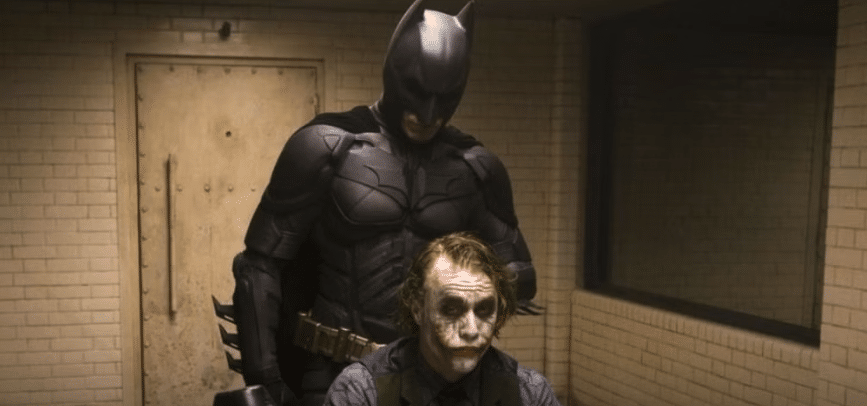
The Effect: For most of the scene, we are tethered to Batman’s perspective. We share his frustration and his desperation to find Harvey Dent. As a result of our knowledge being limited to what Batman knows, the Joker’s eventual reveal of Dent’s location hits us with the same shock and panic that it hits the Caped Crusader.
Third-Person Omniscient: The Godfather
The legendary baptism sequence is a masterclass in the “God’s Eye View.”
The Effect: The film cuts between Michael Corleone at a peaceful church and the simultaneous, violent hits he has ordered across the city. No single character sees all of this at once, however, the audience does. This omniscient perspective highlights Michael’s cold hypocrisy and his total transition into the new Godfather.
FAQ about POV
Yes, but it should be intentional. Many scripts switch POV between acts or sequences to show different sides of a conflict, but doing it mid-scene can be jarring unless you’re aiming for a chaotic, frantic tone.
Not quite. A POV shot is a camera direction showing exactly what a character sees. Narrative POV is the broader perspective of the storytelling itself.
Usually, this is done by using the character’s name followed by the (V.O.) extension for their internal thoughts, or by simply letting the action lines stay focused strictly on their experience.
Conclusion
Choosing the right POV is one of the most powerful creative decisions you can make (no pressure). It defines the relationship between your characters and your audience, turning a simple plot into a deeply personal experience.
Ultimately, whether you want to trap your viewers in a character’s frantic mind or give them a bird’s-eye view of a sprawling epic, mastering POV and understanding the POV meaning is essential for any storyteller.
Focus on your story, not your formatting.
Let Celtx’s Script Editor automatically apply all industry rules while you focus on the story.
Up Next:

How to Use First Person POV in Stories and Screenwriting
Ready to zoom all the way in? Learn how first-person POV puts audiences directly inside a character’s head, when it works best, and how to use it effectively in screenwriting and storytelling.