Every screenplay lives or dies by its characters. While structure and dialogue are vital, the emotional weight of your story depends entirely on the types of characters you populate it with. But here’s the thing most new screenwriters miss: not all characters exist for the same reason.
Some characters drive the story, some challenge it, and some reflect it. Understanding the different types of characters in your script—not just who they are, but what job they’re doing—is one of the fastest ways to level up your writing.
In today’s blog, we’ll be breaking down the major character classifications used in screenwriting, from protagonists and antagonists to foils, stock characters, and internal archetypes like round and dynamic characters.
Think of this guide as your toolbox. You don’t need every tool for every project, but when you know how to leverage these various types of characters, you stop writing roles by accident and start writing them on purpose.
So, let’s get started.
Table of Contents
- What Are the Different Types of Characters?
- Primary Types of Characters: Protagonist vs. Antagonist
- Supporting Types of Characters: Deuteragonists and Tritagonists
- Functional Types of Characters: Foils and Stock Characters
- Internal Classifications: Round, Flat, and Dynamic Characters
- How to Use Different Types of Characters in Your Script
- Common Mistakes When Designing Character Types
- FAQ about Character Types
- Conclusion
What Are the Different Types of Characters?
In screenwriting, character types refer to the narrative function a character serves within the story. This is different from personality, archetype, or genre trope.
Character types answer questions like:
- Who drives the plot forward?
- Who opposes that drive?
- Who supports or complicates it?
- Who exists to reveal something about someone else?
A single character can belong to multiple types at once. For example, your protagonist might be round, dynamic, and also serves as a foil to another character. But one thing to remember is that these categories aren’t boxes but lenses.
At the highest level, character types fall into three broad categories:
- Structural roles (how they fit into the story’s architecture)
- Functional roles (what they do for other characters or the plot)
- Internal complexity (how deeply they’re developed and how much they change)
Okay, let’s begin with the backbone of the narrative itself…
Primary Types of Characters: Protagonist vs. Antagonist
The two most famous roles in a story, coined from Greek storytelling tradition. Here’s a breakdown:
The Protagonist
The protagonist is the character whose goal drives the story forward. This is the person making active choices that cause the plot to unfold.
An important clarification we need to make is that the protagonist is not automatically the hero. They can be flawed, immoral, or even outright villainous. What matters is their agency in the story.
If the story falls apart when you remove this character, they’re the protagonist. Their key traits include:
- Having a clear goal
- Making decisions that affect the plot
- Facing escalating obstacles
- Bearing the consequences of the story’s outcome
For example, in Breaking Bad, Walter White is the protagonist even when he becomes the worst person in the room. The story moves because he moves.

The Antagonist
The antagonist is the force that opposes the protagonist’s goal. Again, this doesn’t have to be a single villain. The antagonist can be:
- A person (e.g. Darth Vader)
- A system (e.g. the justice system in The Trial of the Chicago 7)
- Nature (e.g. the perfect storm)
- The protagonist themselves (e.g. internal conflict)
What matters with an antagonist is resistance. Without opposition, there is no drama, just a series of events politely unfolding. And that needs a strong antagonist who:
- Want something of their own
- Believe they’re justified
- Apply pressure that forces the protagonist to change or break
A weak antagonist doesn’t challenge the protagonist but reveals them for who they truly are.

Supporting Types of Characters: Deuteragonists and Tritagonists
Once you understand protagonist and antagonist, the next layer is supporting structural roles; characters who orbit the central conflict but aren’t passive.
The Deuteragonist
The deuteragonist is the second most important character in the story, who are often:
- A close ally
- A partner
- A love interest
- A moral counterweight
While they don’t drive the story’s main goal, they significantly influence how its pursued. Think Dr. Watson to Sherlock Holmes, Samwise Gamgee to Frodo, and Robin to Batman. People who often offer emotional grounding, represent an alternative approach, or force the protagonist to articulate their values.
In well-written scripts, the deuteragonist has their own mini arc, even if it’s a subtle one. Explore more about how supporting characters like Samwise Gamgee are used in The Fellowship of the Ring here.

The Tritagonist
The tritagonist is the third major character. They’re important, recurring, but not central, often:
- Complicating alliances
- Representing a third perspective
- Acting as a swing vote in the conflict
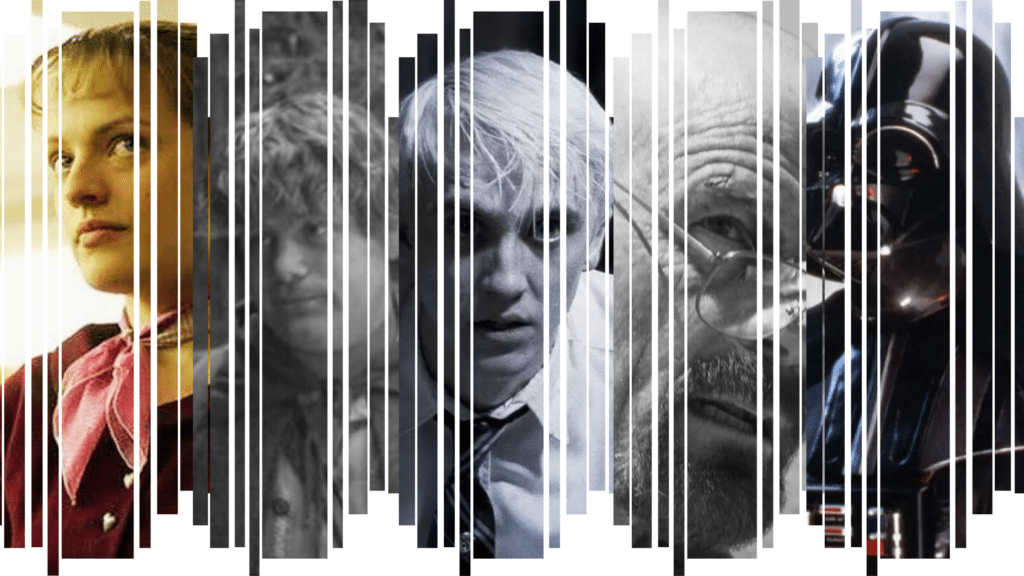
Tritagonists find themselves in characters like Hermione Granger in the early Harry Potter stories, Han Solo in Star Wars Episode IV: A New Hope, and Peggy Olsen in early Mad Men episodes.
They often add texture and tension without dominating the story. They’re essential, but if you removed them, the story would still technically function (just less richly).

Functional Types of Characters: Foils and Stock Characters
Now we move onto the functional roles and characters defined by what they reveal or enable, rather than by plot control.
The Foil
A foil is a character designed to contrast with another character (usually the protagonist) to highlight specific traits. They don’t have to be opposites, but there needs to be a difference. For example, a foil can:
- Share a similar goal but use different methods
- Represent a path the protagonist could take
- Expose flaws through comparison
You may be reminded of characters like Draco Malfoy in Harry Potter, Harvey Dent in Batman, and the Hulk in The Avengers, foil to Tony Stark’s intellect.
Foils are powerful because they let the audience see character traits rather than be told about them.

The Stock Character
A stock character is a familiar, recognizable role that requires minimal explanation. Think:
- The tough cop
- The eccentric mentor
- The overworked assistant
- The comic relief friend
While we’ll forgive you for thinking that stock characters are bad writing, they’re not! They’re just efficient storytelling, and when used intentionally, they can serve the story well. For example:
- They serve a clear function
- The story doesn’t require depth from them
- Their familiarity helps the audience orient quickly
Problems arise when stock characters are treated as if they’re deep, but aren’t You either need to lean into the simplicity or develop them further into a different character type.
Internal Classifications: Round, Flat, and Dynamic Characters
This category focuses on depth and change, not function.
Round Characters
A round character is complex, layered, and psychologically believable. They have contradictions, surprise us in ways that feel earned, and possess inner conflict. Most protagonists and major supporting characters should be round but round doesn’t necessarily mean verbose or overwritten.
Flat Characters
A flat character has one dominant trait or function. They’re consistent, serve a specific purpose, and don’t evolve much. Despite this, they’re often essential for clarity and pacing. Problems only occur when a flat character is positioned as emotionally central to the story.
Dynamic Characters
A dynamic character undergoes meaningful internal change over the course of the story. This change might involve their belief, identity, moral outlook, or self-understanding.
Most protagonists are dynamic, but not all stories require it. Some narratives focus on a static protagonist changing the world instead of themselves. The key here is alignment: does the character’s internal movement match the story’s theme?
How to Use Different Types of Characters in Your Script
Remember what we mentioned earlier; you don’t need to use every single character type in your story; they’re not trading cards you need to collect.
When developing your characters, make sure to assign roles deliberately. Ask yourself four questions:
- What job does this character perform?
- Who do they challenge?
- Who do they support?
- What would break if they were removed?
A useful role of thumb we like to go by is this: Few primary characters, many functional ones.
Your protagonist, antagonist, and deuteragonist deserve the most depth. Supporting characters should earn their screen time by doing something specific, revealing information, increasing pressure, or deepening theme.
Before adding a new character to your cast list, consider:
- Can this role be combined with another?
- Are they serving plot, theme, or character?
- Do they have a distinct perspective?
Clarity beats quantity every time!
Common Mistakes When Designing Character Types
Understanding character types is powerful but only if you apply them with intention. Most character problems in screenplays don’t come from a lack of creativity, but from misusing otherwise solid ideas.
So, let’s run through some of the most common pitfalls writers fall into when working with character roles.
1. Too Many Primary Characters
This is one of the most common and most damaging mistakes in screenwriting. When everyone feels important, but no one actually is!
Writers often fall into this trap for understandable reasons. You love your characters and you’ve spent time developing their backstory, quirks, and emotional wounds. You don’t want anyone to feel ‘less than.’ So, you give everyone a major arc, big moments, and emotional weight.
Unfortunately, the result is a story that feels busy, unfocused, and strangely hollow.
Stories need a clear center of gravity. When too many characters are treated as primary, the narrative starts pulling in multiple directions at once. Instead of momentum, you get fragmentation.
So, how do you avoid this? Well, ask yourself this: whose decision causes the climax to happen?
That character is your protagonist. Everyone else exists in relation to that choice.

2. Confusing Archetypes with Character Types
Archetypes and character types are often used interchangeably, but they aren’t the same thing.
An archetype describes a pattern of behavior or symbolism (the mentor, the trickster, the outlaw) whereas a character type describes a narrative function (protagonist, foil, antagonist)
The mistake happens when writers assume that assigning an archetype automatically gives the character purpose. It doesn’t.
You can have a mentor archetype who contributes nothing to the plot. You can have a trickster who isn’t actually revealing anything about the protagonist. Without a clear function, archetypes become decorative rather than dramatic.
While archetypes add flavor, character types provide structure. Use both, but don’t confuse one for the other.
3. Giving Every Character an Arc
Not every character needs to change. In fact, forcing arcs onto every supporting character often weakens the story instead of strengthening it. When everyone is learning, growing, and transforming, the protagonist’s journey loses its weight.
Change is meaningful because it’s rare and earned, not because it’s universal. Some characters exist to represent stability, embody a fixed belief, and serve as a measuring stick for the protagonist’s change.
Flat or static characters aren’t lazy writing when used intentionally. They only become lazy only when they’re meant to be dynamic but aren’t developed enough to support it.
Ask yourself whether a character’s change reinforces the theme or are you adding in an arc because you feel like you should.
FAQ about Character Types
Absolutely. Most well-written characters are. A protagonist can also be a foil, round, and dynamic.
No. Use what serves the story. Minimalist narratives often thrive with fewer roles.
No. Archetypes describe patterns of behavior. Character types describe narrative function.
It’s a functional role, not a structural one. Comic relief can be flat or round, major or minor.
Conclusion
Understanding character types is about writing with intention. When you know who drives the story, who resists them, who reflects them, and who supports the narrative machinery, you stop guessing and start designing.
Great screenplays aren’t crowded. They’re precise. Every character earns their place, serves a purpose, and deepens the story in a specific way.
Once you master character types, you’ll find something liberating happens. You write fewer characters, but far better ones. And that’s where real storytelling begins.
Focus on your story, not your formatting.
Let Celtx’s Script Editor automatically apply all industry rules while you focus on the story.
Up Next:

Character Development: How to Write Stronger Characters
Knowing the types of character is only the first step. Learn how to develop compelling, believable characters with clear goals, flaws, and arcs that evolve across your story.