Research, research, research. While we couldn’t blame you for thinking of writing as a purely creative endeavor, the truth is that every captivating screenplay begins with a foundation of solid research.
Whether you’re creating a period drama, a sci-fi epic, or a character-driven indie, research allows you to create an authentic and engaging world that your audience will never want to leave.
Yes, screenwriting is all about storytelling, but your story must also resonate with the audience, and that requires a sense of truth. The better your research, the more engaging your screenplay will be.
But what makes effective research, and quite frankly, where do you even begin? In today’s blog post, we’ll explore ten essential things every writer should know about researching for a screenplay.
So, without further ado, let’s get started!
Table of Contents
- Why is Screenplay Research Important?
- Screenplay Research Tip 1: Start with the Basics
- Tip 2: Know Your Genre
- Tip 3: Fact vs. Fiction
- Tip 4: Dive Into Primary Sources
- Tip 5: Use Technology to Your Advantage
- Tip 6: Explore the Weird and Unexpected
- Tip 7: Don’t Overdo It
- Tip 8: Keep Your Characters Grounded
- Tip 9: Test Your Knowledge
- Screenplay Research Tip 10: Be Prepared to Pivot
- FAQ About Screenplay Research
- Conclusion

Why is Screenplay Research Important?
Screenplay research provides the concrete, factual details that transform a generic premise into an authentic, deeply believable world. By grounding your characters’ professions, settings, and conflicts in reality, you prevent logical errors and clichés that pull the audience out of the experience.
Writing a 110-page feature is a marathon of details. If you rely solely on movie-world clichés, your audience will disengage. Authentic writing always resonates deeper.
The secret is applying the Iceberg Theory of research. Exactly 90% of your hard-earned knowledge should remain invisible to the reader. Only the top 10%—the absolute best details—should peek through your characters and plot.
Specific, real-world details give your story a universal appeal. By researching the real-world equivalent of your plot, you can discover organic, surprising twists that make your screenplay feel truly alive. Remember, you aren’t writing a textbook. Your goal is simply to capture the “vibe” of a world so the audience trusts your vision from the very first scene.
Screenplay Research Tip 1: Start with the Basics
First things first, research doesn’t have to be boring. In fact, it can be one of the most exciting times of the screenwriting process. Learning something new or broadening your knowledge of a particular topics can be welcome side effects of this crucial research stage.
Struggling to know where to start with your research? Let’s dive into tip 1:
Before diving into the research rabbit hole, take a moment to assess what you already know and identify what you need to find out. This initial step will save you so much time and help you to focus your research.
First, list topics you’re already familiar with. For example, if your screenplay is set in a small town, and you grew up in one, you may already have insights into the social dynamics.
This is how Gilmore Girls was created. Amy Sherman-Palladino took inspiration for the infamous Stars Hollow from a trip to Washington, Connecticut where she stayed at the Mayflower Inn. This first-hand experience allowed her to fully envision Stars Hollow, where we’d see Lorelai and Rory’s lives unfold.

On the other hand, it’s important to work out what you need to learn more about. To do this, you could break your screenplay into components. Are you missing historical accuracy, cultural details, or technical jargon? Make a list of these gaps and prioritize them.
This important first step is great for avoiding doubling your efforts and channelling your energies into the areas that need the most attention.
Tip 2: Know Your Genre
Not all genres demand the same level or type of research. Understanding the expectations of your genre will guide your research efforts and help you decide how much time you’ll need to spend on it.
Take historical dramas. These will usually need meticulous attention to detail. From specific clothing and speech patterns to real-life events, audiences will expect these stories to be rooted in reality.
Whereas science fiction may not require the same historical accuracy. Instead, it demands plausibility. Researching scientific theories and technological trends can give your world building credibility.
While the Star Trek franchise is one of mostly fantasy and the scientific aspects seem far off what’s possible today, they are grounded in reality. From the original series to the more recent ones, the use of believable and relatable characters with impactful arcs also helps propel this ever-popular series.

Comedies may not need such extensive research as historical dramas or sci-fi, but a strong grasp on cultural references and social trends will set you up well for a great comedy script, allowing the humor to land more effectively.
The key here is to tailor your research to your genre’s demands to ensure you strike the right balance between authenticity and creativity.
Tip 3: Fact vs. Fiction
One of the biggest challenges screenwriters face is knowing where to draw the line between real-world accuracy and creative liberties.
By anchoring key elements in reality, we allow the audience to appreciate when a story’s foundational elements such as historical events, laws of physics, or cultural norms, are accurate.
We then have the option to bend the rules where it matters. As a storyteller, you’re able to take liberties for dramatic or thematic purposes. Just remember, if you do take liberties, it must only be to serve the story itself and not distract from it.Quentin Tarantino’s Inglourious Basterds exemplifies how to balance fact with creative liberties. While the setting and era were thoroughly researched, with Tarantino taking huge inspiration from the spaghetti Western genre, he created a new fictional narrative within the World War II era that enhanced the film’s dramatic impact.
Max Bard’s video essay above explains Tarantino’s inspiration behind Inglourious Basterds and how director Sergio Leone is one of his biggest influences.

Tip 4: Dive into Primary Sources
If your goal is for absolute authenticity, then primary sources are your best friend. First-hand accounts can offer rich, unfiltered insights that can breathe life into your story.
Why not interview experts, historians or people who have lived the experiences you want to write about? Historical documents, diaries, letters, and legal records can also provide invaluable details.
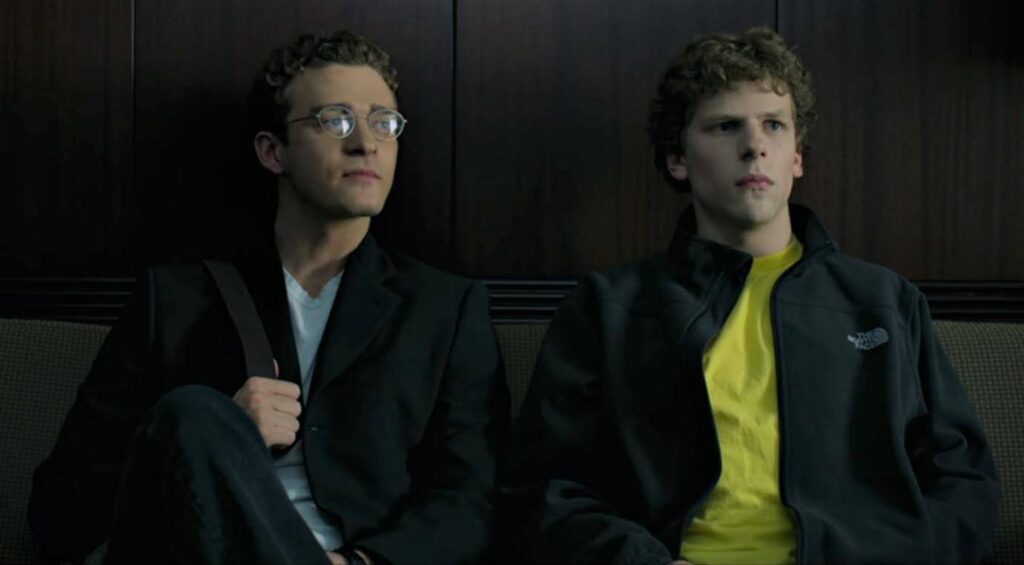
Or why not look at pre-existing documentaries which offer both visual and narrative inspiration? This can be especially useful if you’re tackling unfamiliar subject matters! Aaron Sorkin did extensive research for The Social Network, running through key legal documents as well as talking to the people who were there during the creation of Facebook.
This fantastic video from Behind the Curtain gives us a detailed insight into Sorkin’s research process and how he brought The Social Network to life.
Tip 5: Use Technology to Your Advantage
Gone are the days when research meant endless hours in a library. Today, there are countless tools that can help you organize, streamline and overall enhance your research. Plus, it gives you more time for the good stuff – writing!
You’ll be spending a good chunk of time researching for your screenplay, so it’s important to have tools that work for you to hand.
Screenwriting software such as Scrivener or our very own Celtx allow you to keep your research, outlines and drafts all in one place, eliminating the need for random bits of paper and documents stretching across many folders on your computer!
Evernote and Notion are also ideal for collecting and organizing snippets, articles and random thoughts.
Or, if you’re struggling to find the information you need, online archives on websites like Project Gutenberg, Google Scholar, and the Library of Congress can be treasure troves of information.
Of course, good old-fashioned paper and pen still has its place. When writing Knives Out, before writer Rian Johnson began on the script, he’d map out the arcs and character development in a notebook as he explains in this clip from Outstanding Screenplays.
Dive deeper into character development with our blog on crafting detailed character profiles.

Tip 6: Explore the Weird and Unexpected
Some of the best screenplay ideas come from venturing into uncharted territory! Let your curiosity guide you for a while in your research. You never know what unexpected discoveries it could lead you to, and, in the end, they could just add depth and intrigue to your story.
Why not explore some fun facts? For example, did you know that Victorian England had “professional mourners” for hire? Details like this can inspire unique characters or subplots.
If oddities are more your thing, you could also dive into niche forums, obscure books, or lesser-known documentaries to uncover hidden gems.
In short, don’t be afraid to fall down the research rabbit hole for a brief time. Sometimes, it can be this detour that leads to a memorable screenplay moment!
Tip 7: Don’t Overdo It
Yes, there is such a thing as too much research. While it’s crucial, it can also become a form of procrastination. Knowing when to stop is just as important as knowing where to start.
Before you begin researching, make sure to allocate a specific amount of time to dedicate to it. This could be days, weeks, or months. No matter which you choose, stick to it.
Remember, your goal isn’t to become an expert on a particular subject, but to gather enough information to tell a convincing story. Trust your instincts in when you feel confident in your understanding, and step away when that time comes.
Tip 8: Keep Your Characters Grounded
One of the best uses of research is creating characters that feel authentic and relatable. This involves understanding the social, cultural and historical contexts in which they exist.
Consider how your character’s background influences their behavior, beliefs, and decisions. Research class structures, gender roles, and their relationships within the community.
Most importantly, avoid stereotypes as much as you can!
Chloe Zhao did this extremely well in her adaptation of Nomadland. Here she discusses how she spoke to and connected with people who had adopted the nomad way of life to ensure her characters remained grounded and authentic.

Tip 9: Test Your Knowledge
It’s one thing completing your research, but it’s another to know how to put it into practice. One way to ensure you’ve absorbed what you need is to explain it to someone else. If you’re able to explain it in simple terms, you know you’re ready to integrate it into your screenplay.
You could adopt the elevator pitch and try to summarize your research in a single sentence.
Or share your findings with a friend who knows nothing about the subject. If they understand it, so will your audience. This can be especially beneficial if you’re writing a fantasy or sci-fi script where much of the world will be created from scratch.
Your story, your way. Industry-standard formatting and easy-to-use-tools.
Try Celtx for free today!
Screenplay Research Tip 10: Be Prepared to Pivot
Research is an ongoing process, and sometimes new discoveries will challenge your original ideas. Instead of panicking, consider how you can be flexible.
As and when you discover new things, don’t hesitate to rewrite scenes or characters. Be prepared to allow your research to shape the story organically as you develop it, rather than forcing the research to fit your initial vision. Screenwriter David Seidler, who developed the script for The King’s Speech, had to make a huge shift in the story, explained here by Script Magazine:
A major shift in the story came just before shooting and undid quite a bit of development effort. Hooper and Seidler had imagined a parallel between Logue and Bertie. Just as Bertie was under pressure from snobs to stop seeing Logue and return to more eminent English therapists, Logue felt pressure from his wife Myrtle to give up his practice in London and return home to Australia with their family. Because of Myrtle’s homesickness, Logue even hides from her the fact he’s treating Bertie. This idea was based somewhat on the experience of Hooper’s mother, who had hailed from Down Under, and it remained important to the story until not long before production began.
David Seidler
It’s always ok to come back to your research later in the writing process, especially if you sense something is missing, needs to be revisited, or ultimately, needs rewriting. Always stay curious!

FAQ About Screenplay Research
Always write a basic logline or scene outline before you start researching. If you don’t know what your story is actually about, you will wander in the dark. Set a strict deadline—typically two to three months max—and keep relevance as your magnetic north.
Aim for the Iceberg Theory. Only about 10% of your research should be visible on the page through active character choices and plot complications. Avoid dry exposition dumps or overloading your dialogue with technical jargon just to show off your knowledge.
Yes, but you must find points of emotional universality. You don’t have to know everything about being a taxi driver if you deeply understand self-imposed loneliness. To capture the realistic vibe of a job, read trade articles, watch YouTube driving tours, or interview real professionals.
Reading produced scripts is the ultimate visual research. It teaches you how expert writers format technical actions, handle subtext, and weave real-world research details seamlessly into the story without slowing down the read.
Conclusion
Research is the backbone of any screenplay, providing the depth and authenticity that captivate audiences. By mastering the balance between creativity and accuracy, you can transform your script into a story that feels both original and relatable.
Remember, research is more than just a chore; it’s an opportunity to uncover details that enrich your narrative, ground your characters, and heighten your world-building.
Whether diving into primary sources or exploring the unexpected, staying flexible and disciplined is key.
Armed with these ten tips, you’re ready to tackle the research process with confidence and craft screenplays that truly resonate. Happy writing!
Ready to make the leap?
Celtx is your ultimate partner in bringing research to life.
Up Next:

How to Start a Screenplay (So Readers Actually Keep Reading)
You’ve gathered the facts—now build the foundation. Discover how to translate your raw research into an exciting opening scene, establish your world’s rules, and hook readers from page one.