Filmmaking is often treated like a mystical art form. Some combination of instinct, luck, and the universe being in a good mood. But if you strip away the mythology, one craft sits quietly at the heart of every emotionally resonant, visually smooth scene you’ve ever loved: blocking.
Blocking is where performance, camera, and meaning shake hands. It’s where the director stops being a dreamer and becomes an architect. It’s the difference between a scene that works and a scene that just happens. If editing is storytelling in hindsight, blocking is storytelling in real time.
In today’s blog we’re diving deep into staging, shot flow, subtext, spatial psychology, and even how to use Celtx to map everything out. Whether you’re a filmmaker, screenwriter, actor, or someone who just loves movies, this guide is for you.
Lights, camera, action!
Table of Contents
- What is Scene Blocking? Definition and Choreography for the Camera
- Scene Blocking vs. Staging: Understanding the Key Difference
- How Scene Blocking and Space Create Subtext
- The Five Stages of Scene Blocking
- Cinematic Examples: Scene Blocking that Tells a Story
- How to Plan and Visualize Scene Blocking with Celtx
- Scene Blocking Frequently Asked Questions (FAQs)
- Conclusion

What is Scene Blocking? Definition and Choreography for the Camera
If you’re new to the term, blocking might sound like something that involves stagehands and two-by-fours. But in film, it simply means:
Blocking is where actors move in relation to each other, the camera, and the environment.
Think of it as choreography, but instead of pirouettes and jazz hands, you get eyelines, crossovers, and emotional beats.
Good blocking makes a scene feel inevitable and natural, whereas bad blocking makes a scene feel like the actors are lost in IKEA.
So, what happens when you do blocking well? It:
- Focuses the audience’s attention
- Reveals subtext
- Shapes pacing
- Directs emotional energy
- Makes a scene visually coherent
In short, blocking is all about storytelling!
Scene Blocking vs. Staging: Understanding the Key Difference
These terms get tossed around like popcorn, so let’s break it down with zero jargon.
Staging
The overall arrangement of actors and set elements in a space. Think: Where is the couch? Where is the table? Where are the actors generally positioned?
Blocking
The movement of the actors within that staging. When do they stand? Cross to the window? Sit? Lean in? Drift apart?
A quick rule of thumb: Staging = the map, blocking = the route taken, and camera placement = the audience’s seat.
Staging gives you structure, blocking gives you meaning, and camera placement gives you perspective. Swap any of these around and the same scene becomes an entirely different emotional experience.
How Scene Blocking and Space Create Subtext
Actors say one thing with their dialogue and another with their bodies. Blocking is where the director gets to weaponize this inconsistency.
Distance
Space is emotional currency.
- Two characters inches apart? Intimacy or confrontation.
- Ten feet apart? Emotional walls.
- One character creeping closer while the other steps back? Power shifts.
Levels (Standing, Sitting, Kneeling, Leaning)
Hierarchy often comes down to altitude.
- A standing character towering over a seated one can mean dominance.
- Two characters sitting side-by-side can mean equality.
- One lies down while the other stays upright can mean vulnerability vs. control.
Even subtle shifts like someone perching on a countertop can change the dynamic.
Furniture as Emotion
Furniture can be a key part of building relationships in a scene and isn’t just decoration. For example:
- A kitchen island can become a literal barrier.
- A chair can become a throne or a shield.
- A bed can be an arena, battlefield, or a sanctuary.
- A doorway can symbolize a choice or a threat.
Blocking is the language while furniture is the punctuation.
The Five Stages of Scene Blocking
You’d be forgiven for thinking that blocking means “walk here, say that, walk there”. However, it happens in structured stages, slowly refining meaning and movement each time.
Let’s break down those stages now:
Stage 1 | Director’s Prep
This is your laboratory. Here, you sit with the script and:
- Identify emotional arcs
- Locate power shifts
- Visualize spatial motifs
- Consider camera placement
- Sketch first ideas
Cards on the table. Some directors do this with laser precision; others doodle abstract boxes and arrows that look like cave paintings. What matters is intention.
Stage 2 | Rehearsal
The rehearsal is where theory meets human behaviour. During this stage you:
- Walk through the scene with the actors
- Let them find natural rhythms
- Explore alternate movement
- Adjust for comfort, authenticity, or flow
This is often where the magic happens. A spontaneous choice like leaning against a counter, sitting on a bed, or turning away mid-sentence can reveal more truth than your initial blueprint.
Stage 3 | Lighting
Once blocking is set, the Director of Photography (DP) and the gaffer choreograph the light around the movement. They determine:
- Where practical lights go
- How shadows fall
- Whether the actor’s path stays properly lit
- How the camera transitions between positions
Lighting is 50% of your “cinematic look,” but it’s also what enables or restricts movement.
Filmmaker Ellen Kuras talks about the importance of lighting and blocking in cinematography in this interview with The Talks.

Stage 4 | Adjustments
This is the refinement pass. Once lighting and camera placement are set, you may need to adjust:
- Crosses that land in shadows
- Movements that break continuity
- Timing that doesn’t match dolly movement
- Actor paths that clip equipment
Think of it like tuning an instrument before a performance.
Stage 5 | Shoot
Finally, the scene is captured. If you’ve blocked well, shooting is smooth, performances feel grounded, and editing becomes a joy. If you blocked poorly, shooting becomes a swamp, and editing becomes a triage operation.
Cinematic Examples: Scene Blocking that Tells a Story
Blocking is invisible when done well, but once you know what to look for, you see it everywhere. Here are some of the best examples of blocking in film:
Marriage Story (2019) – The Fight Scene
The emotional explosion is punctuated by distance. Adam Driver crosses the room aggressively; Scarlett Johansson retreats, then advances, then sits. Their movement is a map of their marriage unraveling.
In the Mood for Love (2000) – Hallway Walks
Characters pass each other with inches to spare. Close enough to feel electricity, far enough to maintain propriety. The space between them is the entire movie.
The Godfather (1972) – Michael in the Restaurant
Michael enters in the light, crosses into shadow, sits with his back to the wall, and rises before the gunfire. Blocking foreshadows his moral descent.
Black Swan (2009) – Mirrors as Multipliers
Mirrors are used for psychology as characters see reflections instead of each other, symbolizing fractured identity. Blocking becomes a kaleidoscope of unease, especially for Nina.
Parasite (2019) – Levels and Class
Characters literally exist on different vertical levels: stairs, lofts, basements, turning socioeconomic themes into spatial metaphors.
Thomas Flight explores the Visual Architecture of the movie here:
How to Plan and Visualize Scene Blocking with Celtx
Celtx is one of the best tools for turning blocking from an abstract idea into a concrete plan. It helps you visualize the scene spatially, connect it to shot lists, and communicate clearly with crew.
Let’s break down the workflow.
- Analyze the Script
Before you draw one arrow or place one camera icon, ask yourself:
– What does each character want in this scene?
– Where is the emotional peak?
– Where do the power dynamics shift?
– Where should characters be closer/farther?
While a scene about confession needs intimate movement, another about distrust needs distance, and one about revelation might need a character to stop moving entirely.
Emotion drives movement, and movement drives blocking. - Sketch the Overhead
In Celtx, you can use the Storyboard tools to create a top-down map of the set. Draw walls, doors, windows, furniture, obstacles, and pathways.
Once you’ve done that, it’s time to place your characters.
Character A = Position A
Character B = Position B
Character C = Position C
Label their directions, entry points, and cross paths. This blocking diagram is your battle plan. - Integrate Camera
Once character positions are set, add camera icons. In Celtx:
– Place the camera symbol where each shot originates
– Draw lines indicating the camera’s “line of focus”
– Mark dolly tracks or movement arcs if applicable
– Link each camera point to a shot number on your shot list
Also make sure to ask yourself:
– What is the hero angle of the scene?
– Does the camera follow movement?
– Is there a key reveal moment that requires repositioning?
Blocking without camera coordination is stage acting and blocking with camera integration is filmmaking. - Refine Movement
This is your simulation phase.
Walk through the scene in your head, or on the actual set if available, and ask:
– Is the movement emotionally motivated?
– Do any crosses block a line or break continuity?
– Is there a better way for a character to reveal their inner state?
– Does the camera lose or gain power unexpectedly?
This is where you tweak angles, distances, actor timing, and emotional beats.
Sometimes the smallest adjustment, like delaying a character’s turn by a single line, makes the entire scene snap together like puzzle pieces.
And if you prefer to watch a video guide, here’s a fantastic look into How to Block a Scene from Camp Films

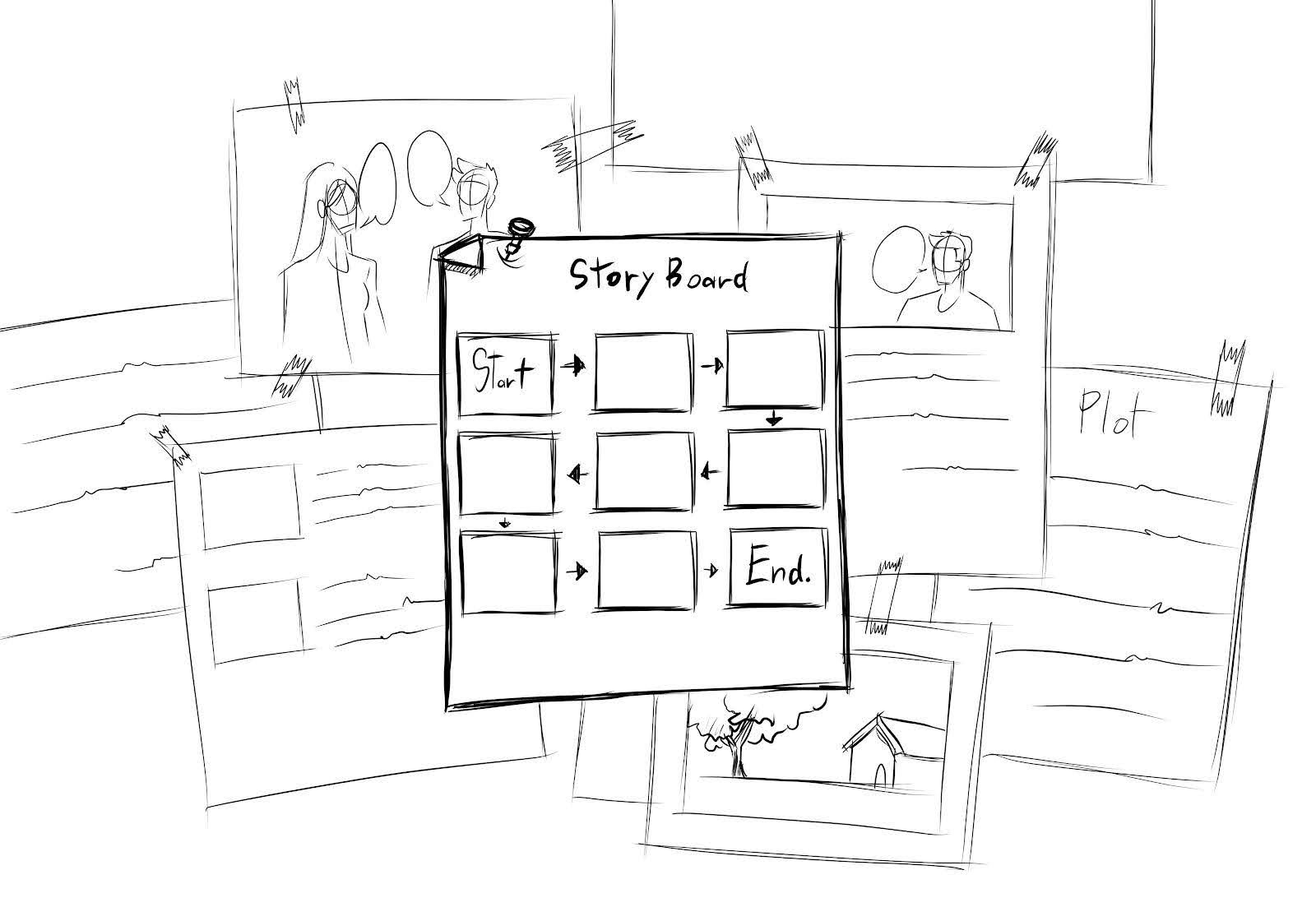
Using the Celtx Shot Blocker:
For a deeper dive on how to use our storyboard and shot blocker, here is our video guide:
Scene Blocking Frequently Asked Questions (FAQs)
The 180-degree rule keeps camera placement on one side of an imaginary line between two characters. It preserves screen direction and prevents disorientation.
Break the rule intentionally? Charming. Break it accidentally? Chaos.
Staging is the fixed arrangement of people and objects. Blocking is the movement of actors within that arrangement.
Generally: no unless the movement is essential to the plot or character.
Examples you can include:
– “He hides the knife behind the counter.”
– “She blocks his path.”
– “The car pulls away, leaving him alone.”
Don’t dictate camera moves or precise choreography. That’s the director’s job.
Primarily:
– Director (creative choices)
– Actors (performance consistency)
– Cinematographer (camera relationship to movement)
– 1st AD (logistical flow)
– Script supervisor (continuity)
Blocking is a team sport. The director just acts as captain.
Conclusion
When blocking is done well, the audience will really feel it. Space becomes emotion. Movement becomes meaning. Camera placement becomes point of view. Blocking is how directors paint with motion instead of color.
If you want your scenes to feel alive, authentic, cinematic, and psychologically rich, don’t leave blocking for the last minute. Plan it. Explore it. Sketch it. Refine it. Let your characters move with intention, even when their words try to hide it. Because in great filmmaking, the line between what characters say and what they do is where the truth hides.
Focus on your story, not your formatting.
Let Celtx’s Script Editor automatically apply all industry rules while you focus on the story.
Up Next:

6 Essential Camera Shots Every Screenwriter Should Know
After planning character movement, learn the next layer of visual storytelling. Explore the difference between medium shots and close-ups, and discover how to use camera angles and composition to convey emotion and tone in every scene.