There’s a strange contradiction at the heart of screenwriting education. Most writers can tell you their favourite films. Many can quote screenwriting “rules” with alarming confidence. Yet a shocking number haven’t actually read many screenplays, if any at all.
Part of this is understandable. Screenplays aren’t marketed like novels. They aren’t always easy to find. And when you do open one, they can feel stark, technical, even disappointing compared to the finished film. But here’s the thing: screenplays are the job.
If you write scripts, reading scripts isn’t optional background research but core training. The more you read, the faster you improve. Structure starts to feel instinctive. Scene length becomes intuitive. You stop overwriting because you finally see how little is required.
In today’s blog, we’ll explore Why reading scripts matters (more than most courses), which screenplays to start with, what to look for when you’re reading, and how to study a script without draining the joy out of it.
So, let’s get into it!
Table of Contents
- Becoming a Better Screenwriter by Reading Screenplays
- Why is Reading Professional Scripts the Fastest Way to Learn Screenwriting?
- Master List: Best Screenplays to Read by Genre
- What to Look for When Reading Screenplays
- How to Study a Screenplay Effectively to Improve Your Craft
- Where Can You Find Free Screenplay PDFs Online?
- Frequently Asked Questions (FAQ) About Reading Scripts
- Conclusion

Becoming a Better Screenwriter by Reading Screenplays
Before we get analytical, it’s worth saying this plainly: you cannot think your way into being a better screenwriter.
You learn by exposure.
Every professional screenwriter has absorbed hundreds of scripts, consciously or not. They’ve internalised how scenes turn, how information is delayed, how tension is built through action rather than explanation.
Reading scripts regularly:
- Trains your eye for pacing
- Develops your sense of what belongs on the page
- Reduces reliance on exposition
- Builds confidence in your own choices
And crucially, it desensitises you to the format. After a while, the capitals, spacing, and white space stop feeling precious or intimidating. It just becomes the language of your job.
If you only take one thing from this post, let it be this: reading scripts should be a habit!
Why is Reading Professional Scripts the Fastest Way to Learn Screenwriting?
Screenwriting books explain theory while scripts show you execution.
You can read five different takes on three‑act structure, but when you read ten produced screenplays, you start to feel structure instead of diagramming it. You see where things stretch, compress, or quietly break the rules.
Reading scripts teaches you:
- How visual storytelling actually works on the page
- What actors need (and don’t need) from a script
- How dialogue functions when stripped of performance
- How little description is truly necessary
- How tone is created through rhythm and restraint
It also exposes myths. Many “perfectly formatted” scripts are dull. Many published, produced scripts are surprisingly loose but extremely clear.
Perhaps most importantly, scripts train your reader’s brain. You quickly notice when a scene hasn’t earned its place, when dialogue is repeating information, or when a beat needs to turn sooner. That awareness feeds directly back into your own drafts.
Writing without reading scripts is like trying to compose music by studying theory alone. You need to hear the melody.
Master List: Best Screenplays to Read by Genre
If you’re new to reading scripts, don’t start with something experimental or wildly outside your taste. Begin with films you already know and admire, because familiarity helps you focus on craft rather than plot.
Below is a starter set by genre, with a note on what each script teaches you. You can also check out some great examples of script on SimplyScripts and the BBC Writersroom.
Best Drama Screenplays to Read:
Manchester by the Sea (Kenneth Lonergan)
Naturalism, restraint, and emotional weight without melodrama.
Lady Bird (Greta Gerwig)
Character‑driven scenes that arrive late and leave early.
Moonlight (Barry Jenkins & Tarell Alvin McCraney)
Minimalist action lines that trust silence and behaviour.
Marriage Story (Noah Baumbach)
Dialogue as conflict, not conversation.
Nomadland (Chloé Zhao)
How observation can replace traditional plot momentum.
Best Comedy Screenplays to Read:
Juno (Diablo Cody)
Voice-driven writing that remains disciplined.
Bridesmaids (Kristen Wiig & Annie Mumolo)
Escalation within scenes and set-piece structure.
Groundhog Day (Danny Rubin)
One of the clearest lessons in narrative economy.
Fleabag – Pilot (Phoebe Waller-Bridge)
Breaking form with control and purpose.
The Big Lebowski (Coen Brothers)
Character comedy powered by rhythm and contradiction.
Best Horror / Thriller Scripts to Read:
Get Out (Jordan Peele)
Plant-and-payoff storytelling done cleanly.
Hereditary (Ari Aster)
Atmosphere built through implication, not excess.
A Quiet Place (Beck, Woods, Krasinski)
Action lines doing narrative heavy lifting.
The Babadook (Jennifer Kent)
Internal conflict externalised through structure.
Nightcrawler (Dan Gilroy)
Relentless character POV driving tension.

Best Sci‑Fi / Fantasy Scripts to Read
Ex Machina (Alex Garland)
Elegant exposition control.
Alien (Dan O’Bannon)
Genre clarity and momentum.
Arrival (Eric Heisserer)
Non‑linear storytelling that still reads cleanly.
Children of Men (Cuarón & Sexton)
World‑building without info dumps.
You don’t need to read everything here. Choose a handful, read them properly, then expand outward based on what resonates with you.
Read scripts, then start your own in Celtx.
What to Look for When Reading Screenplays
Reading scripts casually is enjoyable. Reading them as a writer is transformative.
Start by noticing clarity. At every moment, do you know:
- Where you are?
- Who’s present?
- What’s happening now?
Professional scripts are rarely confusing, even when the story is complex.
Next, look at scene function. Ask yourself: Why does this scene exist? Good scenes usually do at least one of the following:
- Move the plot forward
- Reveal character through behaviour
- Escalate conflict
- Set up or pay off information
Pay close attention to action lines. Strong scripts avoid explaining emotion. Instead, they describe what we can see. Weak scripts often tell us how a character feels without giving us evidence.
Dialogue is another key area. Notice how rarely characters speak in complete explanations. Subtext, interruption, avoidance, and contradiction do far more work than direct statements.
Finally, study pacing. How long are scenes? Where do they end? Pay attention to moments where a scene cuts earlier than expected.
How to Study a Screenplay Effectively to Improve Your Craft
You don’t need to turn script reading into homework. In fact, that often kills momentum. A simple, effective approach is the two‑read method.
First read:
Read quickly. No notes. Experience it like an audience member. Notice where you’re hooked, bored, confused, or emotionally engaged.
Second read:
Slow down. This is where craft reveals itself. Look at:
- Where scenes start and end
- How information is released
- What’s implied rather than stated
- How dialogue and action interlock
If you want to go deeper, try isolating a single scene you admire and rewriting it in bullet points. Strip it down to pure function. You’ll be surprised how lean it really is.
Occasionally, read a weaker script too. The contrast is instructive. Flaws jump out when you’ve immersed yourself in strong writing.
Above all, connect what you’re reading to your own work. Ask what you’d cut, compress, or clarify in your current draft.
Where Can You Find Free Screenplay PDFs Online?
One of the biggest barriers to reading screenplays is simply knowing where to look.
The good news: screenplays are far more accessible than most people realise. Studios release scripts during awards season, writers share them publicly, and many production companies publish scripts intentionally.
We’ve already put together a dedicated blog post on where to find scripts legally and reliably, including tips on which versions to prioritise and how to avoid formatting nightmares, so rather than duplicate it here, this is your sign to bookmark that resource and actually use it. Access isn’t the issue anymore, whereas habit is.
Check out our list of Best Free Movie Scripts as well as these great examples from IMSDb.

Frequently Asked Questions (FAQ) About Reading Scripts
There’s no ideal number. Start with one a week. Consistency beats intensity every time.
Start there, but don’t stay there forever. Comedy writers learn pacing from thrillers. Drama writers learn restraint from horror.
No. Some scripts are for study; others are for enjoyment. Both matter.
That’s the point. Produced scripts often break “rules” but never clarity.
Yes, as long as you understand they include technical elements added later. Focus on story and scene work.
Conclusion
Reading screenplays isn’t optional but foundational. If writing is how you practise, reading scripts is how you learn the language. It sharpens your instincts, accelerates improvement, and quietly teaches you what belongs on the page without noise or theory.
You don’t need to read everything. You don’t need to analyse obsessively. You just need to start and keep going. So, choose one screenplay today, open it, and read ten pages. You won’t regret it! That small habit will do more for your writing than most advice ever could.
Use Celtx to format your first screenplay as you learn.
Let Celtx’s Script Editor automatically apply all industry rules while you focus on the story.
Up Next:
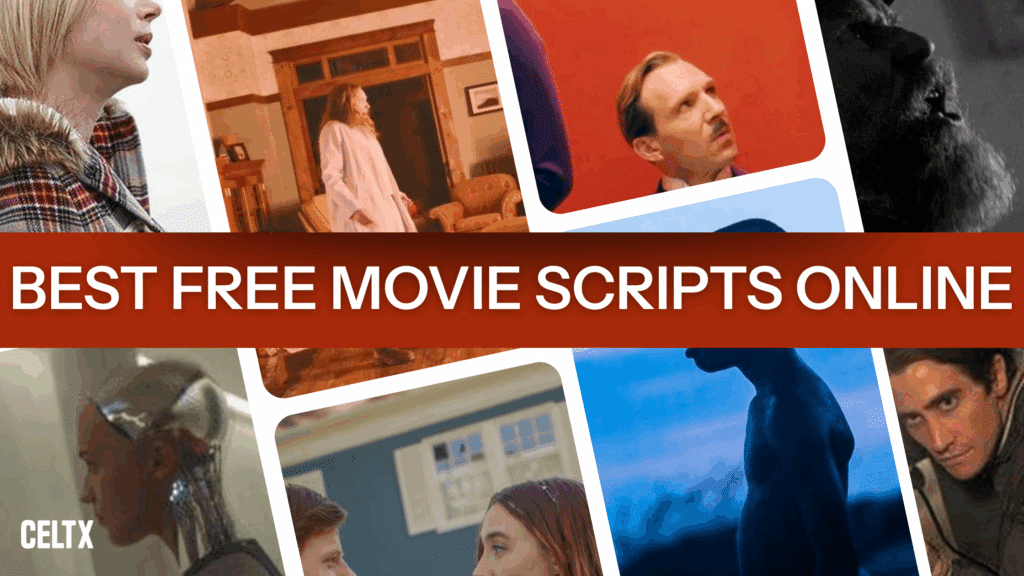
Best Free Movie Scripts Online for Aspiring Screenwriters
You have your reading list—now go get the scripts. Discover the most reliable, legal databases to find your favorite screenplay PDFs and start studying today.