
Melodrama is one of the most misunderstood words in storytelling. Say it aloud in a writers’ room and you can almost hear the collective wince. It’s often used as shorthand for overwritten, cheesy, or emotionally manipulative. And yet, turn on the television, scan the box office, or glance at the most-streamed shows of the past decade, and you’ll find melodrama everywhere, shamelessly drawing audiences in.
From long-running network juggernauts to prestige limited series, melodrama remains one of the most powerful tools a storyteller can wield when it’s handled with intention. This isn’t about characters sobbing in the rain for no reason. Instead, it’s about emotional clarity, moral pressure, and narrative stakes so heightened that the audience feels before they can think.
In today’s blog, we’re stripping melodrama of its bad reputation, examine its mechanics, and look at how modern film and television have reclaimed it, often without daring to say the word.
So, let’s get into it…
Table of Contents
- What is Melodrama? The Emotional Apex of Storytelling
- The Core Characteristics of Melodramatic Narrative
- The Role of Spectacle and Music in Melodrama
- Archetypes and Ethics
- Modern TV Examples of Melodrama
- The 2025 Renaissance of High-Concept Originals
- How to Write Melodrama Without Being “Melodramatic”
- FAQ
- Conclusion

What is Melodrama? The Emotional Apex of Storytelling
Melodrama is a sub-genre of drama that prioritizes emotional impact through sensationalized plotting rather than psychological subtlety.
Where traditional drama often builds tension through realism and restraint, melodrama leans into heightened situations, moral absolutes, and extreme stakes to elicit strong audience reactions: tears, outrage, catharsis, or all three at once.
The characters in melodrama aren’t designed to be mysteries. Their desires, fears, and ethical positions are usually crystal clear. The storytelling engine isn’t “Who are these people really?” but rather “How much will they suffer for what they want?” The plot, from inciting incident to resolution, pushes relentlessly toward emotional peaks, often through coincidence, revelation, or even sudden reversal.
Importantly, melodrama is not accidental excess but deliberate emotional design. When it works, it bypasses intellectual distance and goes straight for the gut, creating a shared emotional experience between storyteller and audience that feels immediate, and almost physical.
The Core Characteristics of Melodramatic Narrative
Melodrama follows a recognisable grammar. Once you know the components, trust me, you’ll start seeing them everywhere.
Let’s break it down:
1. Stock Archetypes
Melodrama relies heavily on archetypes rather than idiosyncratic personalities. The virtuous sufferer, the self-sacrificing parent, the corrupted authority figure, the innocent child. These aren’t lazy shortcuts but emotional accelerants.
Archetypes like these allow the audience to orient themselves instantly, freeing the story to escalate without spending time on nuance.
This doesn’t mean characters are flat, it just means they’re legible and their emotional function in the story is clear from the outset.
2. Sensational Coincidences
Lost children discovered at the worst possible moment. Secrets revealed during weddings or funerals. Long-buried truths surfacing through improbable encounters. Melodrama embraces coincidences as a narrative weapon.
Coincidence in melodrama is about pressure. The world itself conspires to test the characters’ moral limits.
3. Binary Moral Universes
Melodrama often operates in ethical extremes. Good and evil are clearly delineated, even if characters move between them. Moral ambiguity takes a back seat to moral consequence. Actions are punished or rewarded with operatic force.
This clarity is part of the appeal. In an uncertain world, melodrama offers emotional certainty.

The Role of Spectacle and Music in Melodrama
The word ‘melodrama’ comes from the Green ‘melos’ (song) and ‘drama’ (action). Music is all part of the structure.
Score, needle drops, and even heightened sound design act as an emotional blueprint, telling the audience how to feel and when. Think swelling strings under a hospital corridor confession, or a single piano note as a character makes an irreversible choice.
Visually, melodrama favours spectacle: close-ups that linger too long, lighting that heightens mood rather than realism, blocking that isolates characters at emotional breaking points. These stylistic choices aren’t subtle, but subtlety isn’t the goal.
The aim is emotional synchronization. Music and spectacle align the audience’s heartbeat with the narrative’s rhythm.
Archetypes and Ethics
Melodrama is often dismissed as manipulative, but all storytelling manipulates emotion. Melodrama is simply honest about it.
Ethically, the genre is less concerned with moral complexity than moral consequence. It asks: “What does this choice cost?” rather than “Is this choice psychologically realistic?” Characters are judged not by their intentions, but by the emotional fallout of their actions.
This is why melodrama thrives in stories about illness, family, love, injustice, and sacrifice. These arenas already operate on heightened moral terrain. Melodrama formalizes them.
When critics accuse melodrama of being “too much,” they are often reacting to its refusal to minimize pain or soften consequences. Melodrama insists that feelings matter, and that they deserve narrative space.
Modern TV Examples of Melodrama
Despite its reputation, melodrama is alive and well, especially on television. Let’s take a look at some killer examples from over the years.
Grey’s Anatomy (2005-Present)
Few shows demonstrate sustained melodrama as effectively as Grey’s Anatomy. Catastrophic injuries, romantic betrayals, sudden deaths, miraculous survivals, often all within a single episode. Characters articulate their emotions directly, frequently in monologues that border on operatic.
And yet, the show endures because the emotional logic is consistent. The audience knows the rules: love will hurt, loss will be enormous, and survival will come at a cost.

This is Us (2016-2022)
This Is Us represents a more restrained, prestige‑coded melodrama. Its timelines, reveals, and musical cues are engineered to maximize emotional payoff. Deaths are foreshadowed, secrets are withheld, and revelations are timed for maximum impact.
The show’s success lies in its sincerity. It never winks at the audience. It commits fully to emotional earnestness, a hallmark of effective melodrama.
The 2025 Renaissance of High-Concept Originals
In recent years, there’s been a quiet resurgence of high‑concept, emotionally bold original scripts, many of which lean heavily on melodramatic structure while disguising it under genre or prestige framing. Limited series that combine extreme stakes with intimate emotional arcs are increasingly common.
Let’s explore some new hits:
Pluribus (2025-Present)
A post-apocalyptic sci-fi series created by Vince Gilligan for Apple TV.
The show imagines a world where an alien virus transforms humanity into a peaceful hive mind, except for a small handful of immune individuals. Its central hook lies in tension between individuality and assimilation, with emotional stakes tied to isolation, identity, and survival

The Chair Company (2025-Present)
A darkly comic thriller series from HBO about a man whose humiliating encounter with a faulty chair draws him into a sprawling corporate conspiracy.
This might sound absurd, and it is, but it’s exactly that kind of quirky high-concept premise that allows for commentary on corporate culture and personal obsession.
Paradise (2025-Present)
A thriller set in a seemingly perfect, secluded community that collapses into murder and conspiracy. Its central idea: utopia with a murderous underside, is classic high-concept storytelling: simple to pitch, rich to expand.
Black Rabbit (2025-Present)
A stylish crime drama focusing on two estranged brothers drawn into NYC’s underworld. Though grounded in TV genre tropes, its character-forward twist and narrative framing make it feel fresh.

The lesson is clear: melodrama didn’t disappear but just learned to dress better.
An appetite for more melodrama films? Check out this full list.
How to Write Melodrama Without Being “Melodramatic”
This is the tightrope every writer walks. Audiences crave emotional intensity, but they recoil the moment they feel emotionally handled. The difference between powerful melodrama and eye-rolling excess is the integrity of the craft underneath it.
Here are our practical techniques that allow melodrama to feel inevitable rather than indulgent.
- Anchor Every Extreme Action in a Clear Want
Melodrama collapses when characters behave extraordinarily without a clearly articulated desire. Before a character makes a shocking sacrifice, betrayal, or declaration, the audience must already know instinctively what that character wants more than anything else. It’s the basis of their character arc.
This want should be simple and repeatable: love, safety, recognition, forgiveness, belonging. High-stakes emotions require low-complexity clarity. Reinforce the want early and often through action, not explanation. If the audience can state the want in a single sentence, you’re on solid ground. - Escalate Emotion Through Pressure
Melodrama is often mistaken for loudness. Think shouting, crying, grand speeches. In reality, effective melodrama escalates through pressure. Each scene should reduce a character’s available options until the only remaining choice is emotionally extreme.
Think of melodrama as a vice tightening. The emotional response should feel like the last possible release, not the first. - Make Coincidence Hurt
Coincidence is unavoidable in melodrama, but its function matters. Coincidences that solve problems feel cheap and that complicate problems feel tragic.
Secrets revealed at the worst possible moment. Truth arriving just a second too late. Long-lost connections resurfacing when reconciliation is no longer possible. Coincidence should sharpen consequence, not remove it. - Use Restraint at the Line Level
If the situation is extreme, the language should be clean. One of the fastest ways to tip melodrama into parody is overwriting emotional dialogue, what’s often dismissed as “purple prose.”
Short sentences. Declarative statements. Emotional honesty without metaphor overload. Let the audience feel the excess rather than hear the writer describing it. - Trust the Audience’s Emotional Intelligence
Modern audiences are deeply literate in emotional storytelling. They don’t need every feeling spelled out, but just the permission to experience it.
Allow pauses. Let characters choose silence over explanation. Visual storytelling can often carry what dialogue cannot. Melodrama becomes embarrassing only when the script insists the audience react instead of inviting them to. - Embrace Sincerity Without Apology
Irony is often used as a shield against emotional risk. Melodrama requires the opposite: sincerity without embarrassment. If the story commits fully to its emotional stakes, the audience will follow.
The moment a script starts apologizing for its feelings through jokes, undercutting, or tonal retreat, the spell breaks. - Earn the Emotional Payoff
Melodramatic climaxes must feel worked for. The ending doesn’t need to be happy, but it must be emotionally complete. Loss should feel proportional. Triumph should feel costly.
Ask a simple final question: has the character paid the full emotional price of the journey? If the answer is yes, the audience will accept almost any height of drama.
Melodrama succeeds by justifying excess. When the emotional logic is sound, the audience doesn’t see manipulation but meaning.

FAQ
Not at all. Melodrama is only a problem when it’s unintentional or unsupported by character motivation. When used deliberately, it’s one of the most effective ways to engage broad audiences.
Drama prioritizes realism and psychological nuance. Melodrama prioritizes emotional impact and moral clarity. Both are valid; they simply operate with different tools.
No, but they require emotional resolution. The ending must feel complete, whether that means triumph, tragedy, or bittersweet acceptance.
Conclusion
Melodrama is a precision instrument. When wielded with intention, it creates stories that linger not because they were subtle, but because they were honest about their emotional ambitions.
In an industry increasingly driven by engagement and emotional recall, melodrama remains one of the most reliable ways to make audiences care. The trick is to master it, not completely avoid it.
Turn Emotion into Story.
Build scenes that support heightened emotion with clear structure, sharp dialogue, and purposeful choices.
Up Next:
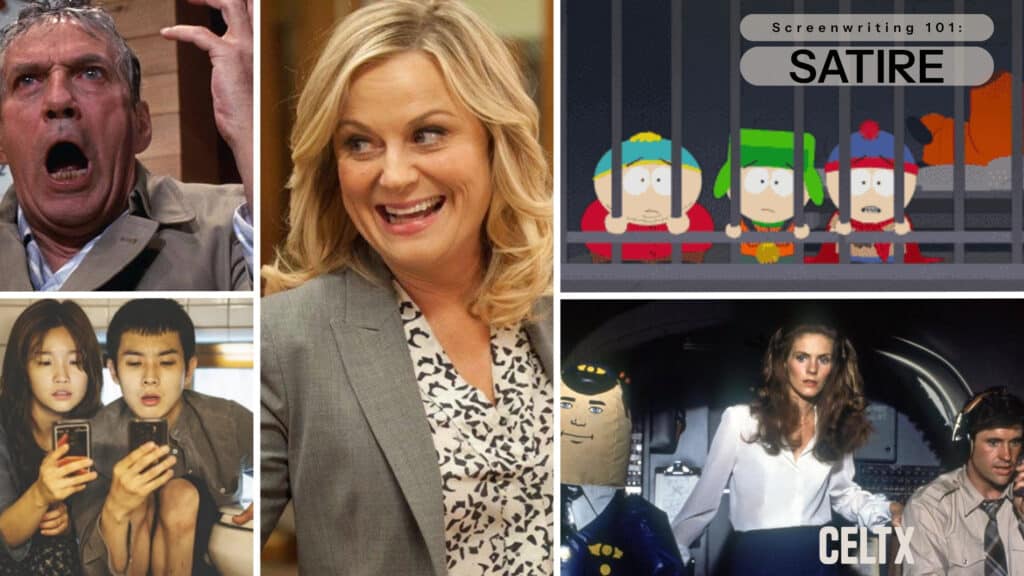
What is Satire? Social Commentary and Subversive Humor
Explore how satire uses exaggeration, irony, and humor to critique society — and how it differs from melodrama’s emotional intensity.