At some point, every writer hears the dreaded words, “That’s a plot hole.” It’s usually said with confidence, often with a smirk. Sometimes by someone who watched Cinema Sins once and now feels legally qualified to execute your screenplay in public.
Okay, but here’s the uncomfortable truth: not everything confusing, unexplained, or coincidental is actually a plot hole. And chasing imaginary plot holes can be just as damaging as ignoring the real ones.
Plot holes are about broken cause-and-effect, not about nitpicks. It’s nothing to do with “I would’ve done something different,” or “why didn’t they just call the police?” let’s face it, if characters always made optimal choices, stories would be over and done with before you could even say the phrase “plot hole”.
That’s where today’s blog comes in. We’ll define what a plot hole actually is, break down the most common types, and look at famous examples that didn’t tank their movies. But most importantly, we’ll discuss how to diagnose and fix logic gaps in your own script without strangling the life out of it.
Ready? Then, let’s go!
What is a Plot Hole?
A plot hole is a break in internal story logic. It’s a moment where the established rules, motivations, or cause-and-effect of the narrative contradict themselves in a way that disrupts believability.
The key phrase here is ‘internal logic’.
Let’s not mistake a plot hole for:
- A character making a bad decision
- Coincidences (those are allowed in moderation)
- Something the audience has to infer
- Something that happens off-screen
- A question the story chooses not to answer
Some of the confusion around plot holes comes from the way popular online criticism, such as CinemaSins, uses the term. These formats often group together genuine logic breaks with continuity errors, genre conventions, off-screen actions, or moments of narrative compression.
While this style of critique can be entertaining, it tends to blur the line between true plot holes and deliberate storytelling choices, leading audiences to expect explicit explanations for elements that films traditionally imply or streamline.
Here’s why plot holes might not be the Achilles Heels you think they are:
So, when does a real plot hole exist? Well, when:
- The story sets up a rule, fact, or motivation
- Later violates or ignores it
- Without explanation or consequence
If the audience feels something is off but can still emotionally track the story, that’s probably a logic gap, not a gaping hole. And those are fixable.
The key thing to remember here is that movies are compression machines that rely on implication, shorthand, and audience intelligence. If every logical step were spelled out, your script would be 240 pages long and unreadable.
The 4 Most Common Types of Plot Holes
Most plot holes fall into a few repeat-offender categories. Once you know them, you’ll start spotting them faster and fixing them cleaner.
Character Motivation Holes
This is the big one. Character motivation holes show up when a character does something that contradicts their established values, risks too much with no personal reason, or exists solely to push the plot forward.
When this happens, the audience wonders why they would do such a thing. And once motivation collapses, everything that follows will most likely feel fake.
For example, a cautious trauma-scarred character suddenly runs headfirst into danger with zero hesitation with no emotional trigger, pressure or flaw driving their decision.
To fix this plot hole, we need to tie the action to one or more of the following:
- A flaw (such as pride, fear, denial, obsession
- A personal stake
- A forced choice between two bad options
Information Holes
This usually happens when characters know things they shouldn’t, don’t know things they absolutely should, or they act on information the audience never sees them receive.
Plot holes like this tend to appear in mysteries, thrillers, and sci-fi. If the audience can’t track how information moves through the story, the plot starts to feel like it’s cheating them.
Say our protagonist was a detective and he suddenly confronts the killer with evidence we never saw discovered. That would set off alarm bells, right? So, we need to make sure this information is embedded in the story.
Don’t worry, you don’t need exposition dumps for this. Instead, integrate breadcrumbs such as:
- A glance at a file
- A throwaway file
- A visual cue

Object and Logistics Holes
Ah yes, the famous teleporting object, and for all the wrong reasons. This happens when:
- Items disappear or reappear without explanation
- Objects are used, lost, and then magically available again
- Physical logistics are ignored, such as time, distance, and injuries
Audiences are surprisingly forgiving, until they aren’t, especially when it comes to these sorts of plot holes. Like a gun being dropped in Act II but reappearing in Act III, or a character being stabbed badly, then sprinting ten minutes later.
You need to track your props like your characters. If it matters enough to affect the plot, it matters enough to account for.
Setup-Payoff Holes
If you set something up and never address it again, you’re dangling narrative thread. And that’s not a carrot you want to leave hanging!
Audiences are pattern-recognition machines. When you promise something, they expect some form of payoff, even if it’s ironic or subverted.
For example, a mysterious ability, rule, or threat introduced early and then ignored when it would clearly solve a later problem. So, how do you fix it?
Well, every setup should result in:
- A payoff
- A reversal
- Or a conscious denial
If you find that your setup doesn’t result in any of these, you should cut it, or make it matter.
Famous Movie Plot Holes (and Why the Movies Still Worked)
Okay, so here’s where we spill the tea:
A movie can have plot holes and still be great.
There, we said it. Why? Well, because a story isn’t a math equation you can follow exact method for. Stories are about emotional momentum and taking the audience on a relatable journey.
So, let’s take a look at some of cinema’s most famous plot holes:
Jurassic Park (1993)
Yes, the geography of the paddock is weird. Yes, the T-Rex enclosure makes no physical sense. But guess what? Nobody cares!
Why? Because the scene delivers terror, character revelation, and ironic imagery all in one. Here, the emotional logic overwhelms the spatial logic.

The Dark Knight (2008)
Yes, we know the Joker’s plans rely on impossible precise. But if you stress-test it, it collapses instantly.
However, the film frames the Joker as chaos incarnate, and more of a mythic force than a logistical human. The story deliberately tells you not to analyze him literally!
Star Wars Episode IV: A New Hope (1977)
Yes, the Death Star has a catastrophic design flaw. But the story establishes desperation, introduces a skilled pilot and frames the shot as near impossible.
Yes, its not airtight logic, but it works within the world it’s in. The lesson here is to fix what breaks immersion, not what Reddit will argue about for the rest of time.
Hungry for more plot holes? Then check out Buzzfeed’s 41 Massive TV And Movie Plot Holes That Make Me Want To Throw My Popcorn At The Screen.
How to Avoid Plot Holes by Using a Plot Outline
This is where us writers actually gain power.
You’ll find that plot holes won’t appear whilst your writing, but when you’re revising what you’ve written. When you stack scenes together and realize the connective tissue is flimsy.
So, how can you avoid plot holes from the start? Well, a plot outline!
Let’s explore how you can use a plot outline to your best advantage:
- Trace the Motivation
If a character’s action feels like a plot hole, ask: “Did they have a personal reason to do this, even if it was stupid?”
While stupid choices are very human, unmotivated ones are fake. Often, a character flaw fixes a logic gap.
So, map each major decision to something like fear, desire, a flaw, or specific pressure. If you can’t articulate why a character acts a certain way, the audience won’t buy that action. - Follow the Object
If an item is missing, use your Index Cards/Beat Sheet to track that object’s journey through every scene.
Literally ask:
– Who has the item now?
– How did the item get there?
– Is the item visible, hidden, lost, or destroyed?
Your index cards and beat sheets truly are your lifesavers here. If you can’t track an object, neither can an audience. - Close the Loop
Ensure that every “set-up” in Act I has a “pay-off” in Act III. If it doesn’t, it’s either a plot hole or a distraction.
That doesn’t mean you should craft a predictable ending but means you need a clear resolution. Remember, if a setup has no payoff, it’s either a plot hole or narrative clutter.
Again, both are fixable by either cutting or committing 100%.
Ultimately, a strong plot outline is about making your logic visible. When you can see the entire narrative laid out in sequence, weak motivations, missing steps, and unresolved setups tend to surface on their own.
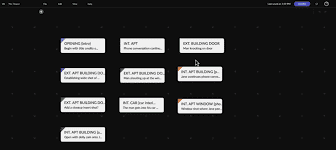
This is where practical outlining tools become especially valuable. Tools like the Celtx Beat Sheet help writers track cause-and-effect across the story by breaking it into clear, sequential beats, making it easier to spot where motivations shift too quickly, information appears without setup, or actions lack a logical trigger.
If a beat can’t be justified in relation to the one before it, that’s often where a logic gap or an emerging plot hole reveals itself.
Diagnostic: How to “Stress-Test” Your Story Logic
Here’s a practical way to find real plot holes without spiraling into self-loathing.
1. The “Why Ladder”
For every major plot turn ask “why” five times.
If you hit, “Because the plot needs it,” or “Because otherwise the story doesn’t work”, you’ve found a weak joint.
2. The Skeptical Friend Test
Explain your plot aloud to someone who likes movies but isn’t a writer. The moment they interrupt asking how something happened, you know that that’s your problem area. Address it.
3. The Removal Test
With each scene or element, ask yourself if the story would collapse if you removed it. If the answer is no, and it’s causing logic strain, cut it out.
Also make sure to check out ProWritingAid’s Plot Hole Challenge to help you find and fix your plot holes before your audience does!
FAQs About Plot Holes
No. Coincidences that create problems are fine. Coincidences that solve problems are dangerous.
No. Ambiguity is intentional while a plot hole is accidental.
They notice confusion, and plot holes are just one cause of it.
Absolutely not. Explain just enough for emotional clarity.
Conclusion
Plot holes aren’t moral failures. They’re pressure points which show you where motivation may need sharpening, where information needs clarifying, and where setups need honoring. Remember, your goal with your story is for the audience to trust you, and not to achieve absolute perfection.
If the audience trusts your characters, your tone, and your emotional throughline, they’ll forgive a lot. If they don’t, even flawless logic won’t save you. So, make sure to write intentionally, not defensively.
And when something feels off, don’t ask “Is this a plot hole?” Instead ask yourself what your story is asking the audience to believe, and whether you’ve earned it. That’s where great scripts live.
Focus on your story, not your formatting.
Let Celtx’s Script Editor automatically apply all industry rules while you focus on the story.
Up Next:
10 Common Screenwriting Mistakes (and How to Fix Them)
Plot holes are just one way a script can lose momentum. This guide breaks down the most common screenwriting mistakes — and shows you how to fix them before they derail your story.