Scripts, whether for film, television or the web, take time to write and involve a hugely intricate process. It’s more than just characters talking to each other and things happening. From the story world providing the foundations and complex character arcs, to crafting an engaging plot, us screenwriters have a lot to consider! This can be the case for all short and feature length films as well as television series.
While it’s possible to develop scripts quickly, others can take years of thought, revision and rewriting. In today’s blog, we’ll explore just why that is, and offer you an insight into the creative process, with some practical top tips that you can use along the way in your own writing!
Table of Contents
- Factors That Determine How Long It Takes to Write a Script
- Screenwriting Timelines: Examples of Long-Developing Scripts
- Screenwriting Timelines: Examples of Quickly Written Scripts
- How to Speed Up Your Screenplay: Productivity Tips for Writers
- Finding Your Pace: How Long Should You Take to Write Your Script?
- Frequently Asked Questions (FAQ)
- Conclusion: So, How Long Does it Really Take to Write a Script?
Factors That Determine How Long It Takes to Write a Script
So, what is it about the scriptwriting process that could call for such an extensive time frame? While it is entirely possible to write a script in a couple of months or even less, most of the time you’ll find it takes a lot longer from initial idea to final polish.
Let’s start by looking at what goes into the process, and how you can make the most of each stage.
Story Complexity
Even before you begin writing your script, you’ll want to do a certain amount of planning. Depending on the period or setting of your story, you may want to do extensive research to ensure authenticity, for example.
Once you’ve finished your research and finalized your initial premise, one of the primary influencing factors of how your script could take to develop is the overall complexity of your story. A simple narrative with a straightforward premise may take less time to write compared to a story with multiple interweaving plotlines, deep emotional arcs, or complex themes. The more intricate the story, the more time it will take to map out its structure and pace.
For example, if you’re writing a story that spans multiple locations or time periods, you’ll need to carefully consider how your narrative threads fit together. In terms of character development, we also recommend you track each character’s arc along these threads and ensure they are logical and fit with your story.
This is especially important if you’re working on a story with an ensemble cast, where continuity and foreshadowing across multiple installments and plot lines are essential.
A great example of this is Marvel Comics’ epic anthology franchise. From Iron Man to Black Widow, Marvel Studios are continuing to produce movies and TV series left, right and center. With many characters, plot lines and even a multi-verse to tie together, the creatives behind the franchise have their work cut out!
In Avengers: Endgame, we see the journeys of multiple characters from different movies collide as they work together to bring back 50% of Earth’s population, including some of their companions and friends.
Each brings their own ‘baggage’ from earlier movies, both individually and collectively, to the game, helping (or even hindering!) the cause. While they all have different goals, together they must work to stop Thanos and prevent the past catastrophe from ever happening.

Character Development
As we know from Avengers and almost all other movies, characters are the heart of any great script. How well they are developed will influence how the audience connects with them. In complex scripts, characters often experience growth and evolution over time, which means us writers must carefully plan out their arcs and integrate them into the plot.
Writing a script? Celtx has everything you need to get started.
Try it today!
Developing and writing these arcs can be time-consuming, especially for principal characters like the protagonist and antagonist. These characters are always the most complex, with multifaceted personalities that have significant depth that will need to be explored.
You may also include flat characters to aid the plot. These won’t need as much development time, but you’ll need to ensure you know what their role is in the story and how they affect your main characters (for better or for worse!)
For your protagonist and antagonist especially, you’ll want to dive into their backstory, motivations, fears and flaws. Each of these needs to resonate with the story theme and evolve as the character goes on their journey. You will need to be patient as you work on these, especially if you have multiple characters who need multi-layered personalities.
World-Building
Characters aren’t the only element that can extend the writing timeline. World building, particularly for those stories set in fantastical or sci-fi worlds, will always need that little extra work. Starting from nothing and building an immersive and believable world with its own set of rules, cultures, geography and history, will of course take more time than a story set in an already established world.
If you’re a writer developing your own fantasy or sci-fi script, you’ll need to know everything about your new world, from specific locations, a sense of the time and place. The challenge is how to integrate your encyclopedic knowledge of your world into your screenplay without overwhelming your audience with exposition.
Screenwriting Timelines: Examples of Long-Developing Scripts
Some scripts take years, even decades (yup, decades!), to come to fruition. This can be for a variety of reasons, from story complexity to scope or the creator’s meticulous attention to detail.
Here are a few well-known examples of those scripts that have taken a little extra time.
Avatar (2009)
James Cameron’s Avatar took longer to develop than first expected. While the script was written quickly, the world-building and visual design took longer.
Cameron had an idea for the world of Pandora as early as 1994, but due to technological limitations, it wasn’t until the advancements in CGI and motion capture technology, that he was able to truly realize his vision. The world-building involved creating Pandora’s lush, detailed environment and alien ecosystem, fauna, and the indigenous Na’vi culture.
The time Cameron spent developing the world of Avatar, from the script to the visual effects, played a large part in the film’s groundbreaking success. Avatar’s development became a long, meticulous process, with Cameron making sure Pandora’s every detail felt alive and immersive. This focus on creating a new world and pushing technological boundaries led to a production timeline of well over a decade.

Your story is worth it — no matter how long it takes.
Start crafting your script today with Celtx.
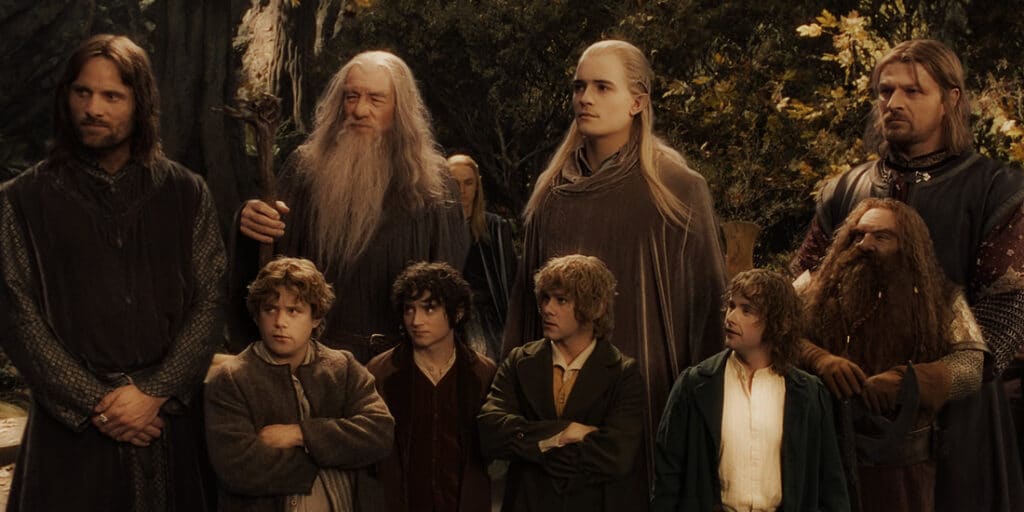
The Lord of the Rings (2001-2003)
Peter Jackson’s film adaptation of The Lord of the Rings also took years to develop. Bringing J.R.R. Tolkien’s labor of love, Middle Earth with its rich cultures and mythology to the big screen was no easy or quick feat. Other filmmakers had certainly tried an adaptation in the past, which resulted in multiple unproduced scripts and concept art (even an animated short!)
It was in 1995 that Peter Jackson decided to take the helm, with New Line Cinema taking up the huge budget. Jackson was adamant that it would take multiple movies to do Tolkien’s world justice, three in fact – one for each book.
It wasn’t until 1997 that work began on the storyboards and screenplay with writers Christian Rivers, Phillipa Boyen and Fran Walsh, working more chronologically to create a faithful but movie-friendly story.
Director Peter Jackson worked closely with visual effects teams and designers to ensure the world of Middle Earth was faithfully recreated. Months before filming began in 1999, design and pre-production took place. All three movies were shot one after the other, with three years of pick-up shots and post-production. The final film The Return of the King was released in 2003, nearly 10 years after Jackson’s first proposal.
Screenwriting Timelines: Examples of Quickly Written Scripts
Of course, not all scripts take 10+ years to make! It is possible for stories to come together quickly and writers to produce their scripts within days or weeks. There’s nothing wrong with a faster process as this often reflects intuit and improvisation on the writer’s part.
A successful script doesn’t always need years of reworking to find its voice. Sometimes, all it takes is a burst of inspiration. Here are a couple of famous scripts that came together in just a little more than a blink of an eye!
Need a little inspo? This might help: 999 Short Story Ideas by Celtx (To Help You Get Started) || Celtx Blog
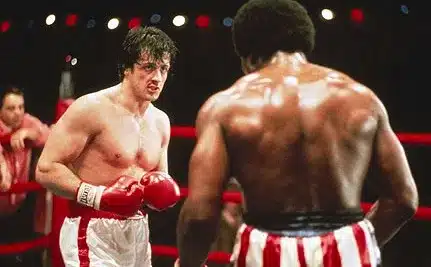
Rocky (1976)
Sylvester Stallone’s Rocky is one of the most famous examples of a script written quickly. He wrote the script in just three days, inspired by his love of boxing and a fight between Muhammad Ali and Chuck Wepner.
Stallone insisted on playing the title role, despite his script being relatively unknown and lacking major production backing.
Despite this and Stallone’s quick writing process, Rocky went on to become an iconic success, earning multiple Academy Awards, including Best Picture. Stallone knew exactly what he wanted to say and how he wanted to say it. When a story is deeply personal or straightforward, the words can come naturally, speeding up the creative process.
The Blair Witch Project (1999)
One of the most successful independent films of all time, The Blair Witch Project was written by Daniel Myrick and Eduardo Sánchez in just a few weeks as students.
The first version of the script was more of a loose outline, with the writers intending for the dialogue to be mostly improvised. They wanted the actors to improvise based on the events happening around them and their interactions to help build tension around the unfolding mystery.
This approach gave the film a deep sense of realism and the minimalist writing allowed it to be produced quickly.

How to Speed Up Your Screenplay: Productivity Tips for Writers
We all know that the creative process is often unpredictable, with lots of factors affecting how we write. However, there are practical steps we can take to maintain a steady pace without sacrificing quality.
Create a Writing Schedule
To make progress, consistency is the key! Set aside a designated time to write – it doesn’t need to be every single day, but a time where you can sit down and focus on your work. It could be for a few minutes or a few hours, but every session, no matter how long or short, will help you make steady progress.
Find a time that suits you whether in the morning when your mind is fresh, or a night if you’re more of a night owl! Find what works best for you and stick to it!
Set Deadlines
Setting yourself deadlines can help give you a sense of urgency and motivation. This is great when you find yourself against writer’s block or moments of self-doubt.
These deadlines don’t have to be set in stone, but setting personal milestones can help keep you on track. Be realistic with your expectations, however, and allow room for flexibility if you find yourself needing more time.
Take Breaks to Recharge
Writing is a mentally taxing activity, and taking regular breaks is essential to help you keep focus and creativity. Step away from the screen, go for a walk, or do something completely unrelated to writing.
Give your mind a chance to reset and return to your project with fresh ideas and a clearer perspective.

Finding Your Pace: How Long Should You Take to Write Your Script?
It’s all well and good us talking about scripts that took decades to develop versus those that came together in a matter of weeks, however, when do you know when the speed up and slow down in your writing process?
Yes, pushing through can be an effective way to overcome writer’s block, or finish a stalled draft, but there are times when taking your time and slowing down can result in a stronger, more refined script.
If you find you’re stuck in a pit of perfectionism, it may be time to speed up. By constantly revising the same scenes or overthinking every line, you can very quickly prevent your ongoing progress. When setting your writing goals, perhaps aim for a certain number of words or pages per day to break free from the cycle of over-analysis.
Another way to speed things up is to write a rough draft to get your ideas on the page first, with revisions reserved for later.
If you’re working with others and have external production constraints on the script, focus on the core qualities of your story – strong characters and engaging plot.
On the other hand, if you’re working on complex stories, detailed character arcs, or intricate world building, it is crucial to take the time to fully flesh out your ideas. This will save more time later as you won’t need to do as many rewrites or revisions. If you rush through moments that require further emotional depth or explanation, your script could feel underdeveloped.
Sometimes, you’ll also want to take a step back and give your ideas time to evolve in your mind. Some of your best writing could grow from allowing yourself to explore your characters’ personalities, consider your narrative structure and themes, with your script becoming more compelling than ever before.
Ready to challenge yourself? NaNoWriMo for Screenwriters: Kickstart Your Scriptwriting Journey || Celtx Blog
Frequently Asked Questions (FAQ)
There is no single answer, as the time it takes to write a script varies widely, often ranging from three months to two years for a professional-level draft. Factors like research, rewrites, and the writer’s pace all influence the timeline.
The main factors that determine the timeline include the complexity of the story (e.g., historical accuracy, specialized research), whether you outline thoroughly beforehand, and the number of drafts and rewrites required to finalize the script.
Yes, some notable scripts have been written in a very short amount of time, sometimes as quickly as a few weeks (Blair Witch Project) to a couple of months. However, these drafts usually undergo an extensive, much longer rewriting and development process afterward.
It is generally better to find a balance. While speed can help maintain creative momentum and finish a draft, taking sufficient time is essential for the necessary rewriting, researching, and developing the story’s complexity.
One of the best ways to speed up the process is to outline thoroughly before you start writing. Planning your plot points and character arcs can prevent long periods of writer’s block and ensure you maintain momentum.
Conclusion: So, How Long Does it Really Take to Write a Script?
While some scripts take years to develop, others come together quickly, driven by a burst of inspiration or the writer’s immediate connection to the material.
Writer Scott Myers’ conversation with filmmaker Charlie Kaufman talks more about how individual a writing process is and how long it takes for Kaufman to write his scripts. Check out a snippet of the interview here.
The key to writing a great script is understanding when to push forward and when to take your time. Whether your script takes weeks or years to complete, the important thing is to stay focused, trust the process, and allow yourself the space to create something that resonates with your audience.
Focus on your story, not your formatting.
Let Celtx’s Script Editor automatically apply all industry rules while you focus on the story.
Up Next:

Script Length 101: How Many Pages is the “Average” Movie Script
Now that you have guidance on how long it can take to write a script, find out how many pages an average movie script is based on format, genre, and more.