
Let’s get one thing out of the way: indie film in 2026 is not a budget figure but a mindset, a risk profile, and more often than not, a minor miracle held together by spreadsheets, favors, and stubborn belief.
The old shorthand (indie = cheap) hasn’t survived streaming disruption, post-pandemic labor realities, or the rising cost of simply putting humans on set without burning them out or breaking the law. Today’s indie landscape stretches from just a few dollars to $20 million prestige films with name actors, tax incentives, and financiers who call it independent because a studio didn’t fully own it.
And here’s the hard truth: most indie films don’t fail because of bad ideas or small budgets. They fail because of bad budgets that don’t match ambition, don’t reflect reality, or don’t leave room for things going wrong (because things will go wrong).
In today’s blog, we’ll explore building a budget that protects your creative vision instead of quietly sabotaging it.
Let’s get going.
Table of Contents
- What Constitutes an Indie Film Budget in 2026?
- The 2026 Indie Film Capital Stack
- Above-the-Line vs. Below-the-Line in an Indie Film Budget
- Where Indie Film Budget Dollars Go in 2026
- Surviving the “Pinched Middle”
- How to Build an Indie Film Budget from Your Script Breakdown
- Indie Film Budget FAQs
- Conclusion

What Constitutes an Indie Film Budget in 2026?
In 2026, an indie film budget typically lives somewhere between $100,000 and $20 million. That’s a huge range, and that’s the point. What unites these projects is ownership and control.
At the low end ($100k-$500k), budgets are often:
- Self-financed or crowdfunded
- Crew-light, schedule-heavy, and favor-dependent
- Highly exposed to burnout and scope creep
Mid-range ($1m-$5m), you’re looking at:
- Professional crews and union considerations
- Real like producers, real insurance, and consequences
- The most financially dangerous zone in indie filmmaking
At the top end ($10m-$20m), indie means:
- Non-studio financing
- Name talent used to unlock equity or pre-sales
- Strong incentives and complex financing structures
But here’s the kicker: creative control doesn’t scale with budget, but with leverage. A $300k film fully financed by its director may be more indie than a $15m film with six equity partners and a completion bond breathing down its neck.
Budget size determines how you make the film. Financing structure determines who gets to make decisions when things get uncomfortable.
The 2026 Indie Film Capital Stack
So, where does the money actually come from?
If you’re still imagining a single benevolent investor writing one big check, I regret to inform you that it’s 2026. Most indie films today are funded through a capital stack: a layered mix of money sources, each with its own expectations, risks, and strings attached.
Equity: The Dream and the Danger
Equity is still the backbone of indie financing. It’s also the most misunderstood.
Pros:
- No guaranteed repayment
- Flexible in theory
- Often aligned with creative upside
Cons:
- Investors expect transparency, professionalism, and a plan
- Too many equity partners = decision paralysis
- Everyone wants to be ‘hands-off’ until something goes wrong
In 2026, equity investors are savvier. They expect:
- Realistic budgets (not optimistic spreadsheets)
- Clear recoupment waterfalls
- A distribution strategy rather than going straight to Sundance
Incentives: Free Money (Well, Almost)
Tax credits, rebates, and soft money are no longer optional at the mid-to-high indie level. Such incentives now routinely offer:
- 20-40% of qualified spend
- Cast and crew costs (with caps)
- Post-production in certain territories
But incentives don’t arrive magically. They require:
- Upfront cash flow
- Accurate reporting
- Compliance with local rules that are constantly changing
If you miss a deadline or misclassify a cost, and that ‘free money’ evaporates.
Debt
Debt financing like gap loans, bridge loans, and tax credit loans can make a film possible or slowly destroy it. It’s usually secured against:
- Tax incentives
- Pre-sales
- Distribution guarantees
The risk isn’t the loan itself but timing. If repayment is delayed and interest accrues, your film’s backend can disappear before it ever premieres. Debts should support a known revenue event.
Use Celtx to create call sheets, schedules, and stripboards in minutes.
Click here to get started.
Above-the-Line vs. Below-the-Line in an Indie Film Budget
Every budget is divided into two philosophical camps.
Above-the-Line (ATL)
ATL includes:
- Writer
- Director
- Producers
- Principal cast
These costs are tied to development and creative authorship. They’re also the most emotionally charged line items because this is where passion meets ego.
In 2026, smart indies often:
- Defer ATL fees
- The comprehension to milestones
- Use backend creatively to preserve cash
Below-the-Line (BTL)
BTL is where the film actually happens:
- Crew
- Equipment
- Locations
- Production design
- Post-production
Here’s the uncomfortable truth: BTL is not where you save money without consequences. Underfunding BTL leads to:
- Longer schedules
- Exhausted crews
- Fix-it-in-post fantasies that never come true
If your budget is tight, reduce the scope instead of curbing your infrastructure.
Where Indie Film Budget Dollars Go in 2026
Let’s talk about where the money actually disappears, from pre-production, to post-production.
Labor Is the Budget
Crew costs are the single biggest driver of indie budgets now. Fair pay, shorter workdays, and union compliance are baseline expectations. Trying to undercut this doesn’t make you uninsured.
Time Is More Expensive Than Gear
Gear costs have stabilized, while time has unfortunately not.
Every extra shoot day multiplies:
- Crew wages
- Catering
- Locations
- Transportation
A tight, realistic schedule saves more money than cutting a lens package ever will.
Post Is No Longer Optional
Post-production now includes:
- Data management
- Sound design for multiple deliverables
- Color pipelines that work across platforms
Skipping post-production is how films die quietly after production.

Surviving the “Pinched Middle”
The most dangerous place in indie film is $1M–$5M. You’re too big to wing it and too small to absorb mistakes.
This is where films:
- Look expensive but feel cheap
- Attract investors but not safety nets
- Collapse under cash-flow pressure
Operational precision is crucial here. That means:
- Locked scripts before budgeting
- Accurate schedules
- Real contingency
- Conservative assumptions
Don’t be fooled. Precision isn’t there to limit creativity. When your logistics are solid, you have room to take creative risks instead of financial ones.
How to Build a Budget from Your Script Breakdown
Every credible indie budget starts in the same place: the script breakdown. This is where creative intention meets financial reality, and where most films quietly succeed or fail long before a camera is turned on.
A breakdown translates the written page into production requirements. It reveals what the film actually demands in terms of people, time, and infrastructure, rather than what we hope it can be made for.
How to build a budget from your script breakdown
- Break Down Every Scene
A script breakdown involves identifying every element required to execute each scene. Cast, locations, props, wardrobe, vehicles, stunts, special effects, animals, children, weather, time of day, if it appears in the script, it belongs in the breakdown.
Each scene should be examined with a few core questions in mind:
– Who needs to be present?
– Where does this scene take place, and how controllable is that environment?
– What physical actions occur?
– What elements introduce complexity or risk?
Complexity drives cost. Night work, period settings, exterior locations, large groups, and precision-based action all increase pressure on the schedule and the budget. Identifying that pressure early gives you options later. - Convert Script Elements into Line Items
Once the elements are identified, they are assigned to departments and translated into line items. This process is more literal than many filmmakers expect.
A new speaking role affects casting, payroll, wardrobe, hair and makeup, transport, catering, and scheduling. A new location introduces permits, fees, location management, logistics, and potential company moves. A recurring prop may require construction, storage, continuity tracking, and maintenance.
Each creative choice carries downstream costs. Understanding those connections is what turns a breakdown into a usable budget. - Let the Schedule Inform the Budget
The breakdown feeds the schedule, and the schedule determines the financial shape of the film. Shoot days, company moves, crew size, overtime exposure, and turnaround requirements all flow from scheduling decisions.
Small scheduling efficiencies compound quickly. Consolidating locations or reorganizing scenes can reduce days, simplify logistics, and lower costs across multiple departments.
Conversely, an inefficient schedule can inflate a budget without adding anything to the screen.
Time remains the most expensive resource in production, and it should be treated as such. - Identify Budget Pressure Points
Before finalizing the budget, it’s critical to identify scenes that carry disproportionate cost or risk. These often include sequences that combine multiple demanding elements like specialized crew, technical execution, environmental challenges, or tight performance requirements.
These scenes deserve extra scrutiny during development. Adjustments at the script level can often preserve the intention of a moment while reducing its financial footprint. Strategic refinement here can stabilize the entire production. - Align Scope, Schedule, and Resources
A sustainable budget reflects alignment between what the script asks for, how the film will be shot, and the resources available. When those elements are out of sync, the strain shows up later as delays, compromises, or financial shortfalls.
Making alignment decisions early protects the production and the people making it. It also creates a clearer financing plan and a more realistic path through post-production.

Want a more detailed run down? Well, our comprehensive step-by-step Film Budgeting guide, including script marking, departmental costing, scheduling logic, and contingency planning covers the workflow from first breakdown through locked budget.
The essential principle remains the same: a budget is the financial expression of the story on the page.
Indie Film Budget FAQs
It should but often doesn’t. At minimum, you need:
– Deliverables
– Festival materials
– Publicity assets
If marketing isn’t in your budget, someone else controls how your film enters the world.
Earlier than you think. A line producer is there for risk mitigation. Bringing one in during development can save you far more than their fee by catching unrealistic assumptions early.
Yes, but it changes how you raise it. Without name talent, equity tends to come from:
– Personal networks
– Regional funds
– Grants, labs, and soft money
– Smaller checks spread across more investors
And what you lose in pre-sales leverage, you must make up for with:
– A sharply defined audience
– A credible director vision
– A budget that clearly matches scope
In 2026, financiers are less star-obsessed than they were, but they’re far more allergic to vague positioning.
More than your top-sheet suggests. Even with incentives, you’ll need:
– Full production cash
– Partial post-production cash
– Working capital to cover delays and incentive lag
A common rule of thumb: secure 110–120% of your production budget in cash or guaranteed financing before principal photography. If your plan relies on “closing the last piece during the shoot,” you’re just gambling with a movie.
Conclusion
Indie filmmaking in 2026 is harder, more complex, and more demanding than ever. But it’s also more powerful.
You have more tools, more paths to financing, and more ways to retain control, if you respect the budget as a creative document, not an afterthought.
A good indie budget doesn’t just fund a film. It protects the people making it, preserves the story you set out to tell, and gives your project a fighting chance to exist beyond a hard drive. The future of film is funded by clarity, precision, and courage. And yes, still a little bit of madness.
Don’t guess your costs.
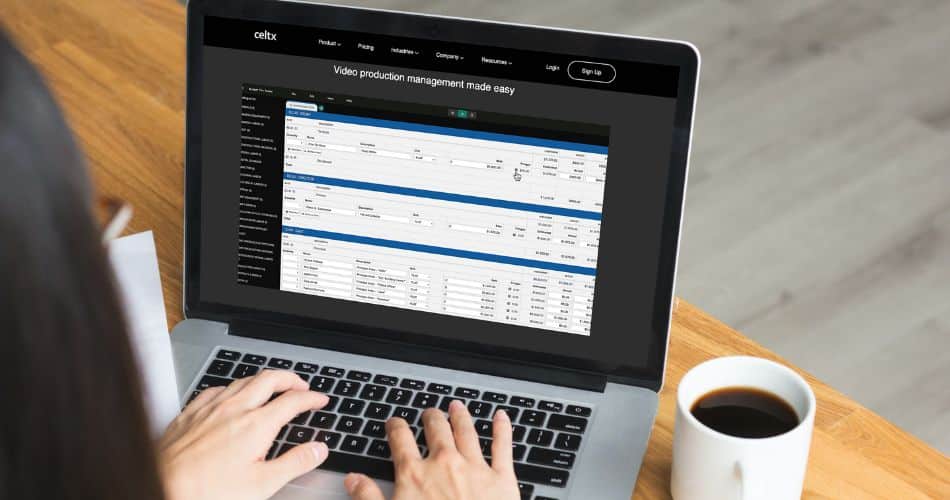
Use the Celtx Budgeting tool to tie your script elements directly to your bottom line.
Up Next:
How to Create a Film Budget
Ready to put numbers on the page? This step-by-step guide walks through building a film budget from your script — with templates you can adapt for any indie production.