To paraphrase Orson Welles, a writer needs a pen, an artist needs a brush, and a filmmaker needs an army. This is not an overstatement: your average big budget Hollywood feature most likely boasts a crew of at least five hundred people. In the current age of effects-driven tentpole spectacles, it’s not uncommon for crew numbers to climb into the thousands – Iron Man 3, for example, credited a staggering total of 3,310 people. That’s an army.
In 2026, the industry has moved away from “bloated crews” toward lean, high-efficiency teams. This isn’t just about saving money; it’s about operational stability. Having the right people in the right chairs ensures your production remains safe, stays on schedule, and yields an editable product.
Below are the 8 essential film crew positions you must fill to ensure a professional result.
What Are the Most Essential Film Crew Positions?
The most essential film crew positions are the Assistant Director (AD), Director of Photography (DP), 1st Assistant Camera (AC), Gaffer, Grip, Sound Recordist, Hair & Makeup Artist, and Production Assistant (PA).
These roles form the “Core Eight” (a term we just coined) of a professional skeleton crew. They cover the four critical pillars of production: safety/logistics, visual continuity, technical execution, and personnel support.
In my experience, if you cut any of these roles, the quality of your film doesn’t just dip—your set becomes statistically more prone to “lost shoot days” and technical errors that are impossible to fix in post-production.
The Core 8: Your Production Skeleton Crew
1. Assistant Director (AD)
On a full-scale crew, you will find multiple ADs: a 1st AD, 2nd AD, a second 2nd AD, and a 3rd (Trainee) AD. Each one forms a link in the chain of command from the director down to the individual departments.
Taken as a whole, the purpose and the main responsibilities of the AD team is to hash out the shooting schedule, create and distribute call sheets, relay orders from the director, and keep everyone informed and on time. They’re masters of communication and addressing problems before they boil over. Having at least one AD on your team will guarantee a smoother shoot.
2. Director of Photography (DP)
This one is kind of a given, but the importance of a quality DP (also known as the cinematographer) cannot be understated. It’s their job to capture your cinematic vision on camera. A qualified DP will be able to tell you exactly what kind of equipment you’ll need to achieve your desired look, and design the appropriate lighting plans. They’ll also figure out the best way to frame your scenes, position actors, and move the camera – most of all, they’ll make it look good. It’s not unheard of for DPs to serve double duty as their own Camera Operator, which can be a boon for smaller crews. This is one position you do not want to skimp out on.
3. 1st Assistant Camera (AC)
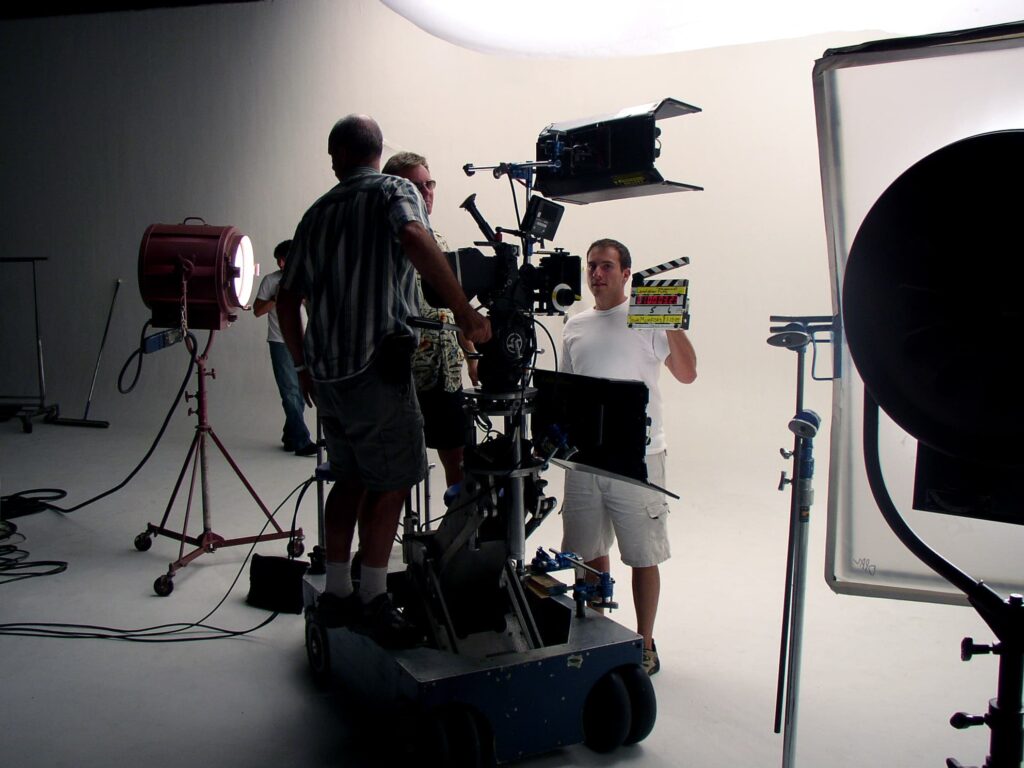
Even if your DP is operating their own camera, they can’t do it all themselves. This is where the 1st A.C. comes in. They make sure that the camera is working properly, that the lenses are clean, and that all necessary equipment is ready to go. The most important aspect of the Camera Assistant’s job is pulling focus – meaning they work with your Camera Operator / DP to ensure that the subject of a shot remains in focus throughout a take. This is accomplished by setting marks that reflect where actors or objects will be in relation to the camera, determining the distance, and then adjusting the focus on the lens to maintain a sharp image. This is an very technical and highly skilled job, and is indispensable to achieving a true cinematic look.
4. Gaffer
The gaffer is responsible for executing your DPs lighting plan. This means choosing the appropriate lights, flags, filters, and corresponding lighting apparatus, then positioning them to achieve the look that you and your DP are shooting for. On smaller crews, the gaffer will also be responsible for making sure that the lighting setups are properly (and safely) powered. A fun note on etymology: gaffing originally referred to manually moving overhead lights on studio lighting grids using a long, hooked pole called a gaff.
5. Grip
No grip, no guts. Grips are the film crew’s muscle. They load in gear and assemble, maintain, and move the heavy equipment that makes filmmaking possible: dollies, tripods, C-stands, sandbags, cranes – you name it. It’s physically demanding work, but a good grip is more than just a strong back. They keep your shoot sturdy and safe, and rig equipment setups that will help you achieve the shots you need.
6. Sound Recordist
Bad sound can sink your project. Having someone on location with the equipment and experience to properly capture sound is absolutely crucial. Ideally, this person should know how to operate microphones, ride gain, run a mixer, and be attuned to their environment – they’ll be able to hear things that you can’t, and will work to make sure that unwanted noise doesn’t end up on the track.
7. Hair & Makeup
Shoots can be long and exhausting. If you’re working with actors, you need to make sure that their appearance is camera-ready and consistent, otherwise visual continuity can go out the window. Your Hair & Makeup technician will have specialized cosmetics and knowledge of techniques designed specifically for achieving a certain look on-camera. At the very least, having one around to make touchups before a take makes a huge difference in the final product.
Related Celtx Blog: How to Manage a Film Budget [Top Sheet & Templates Included]
8. Production Assistant (PA)
A Production Assistant‘s job is to do the work that nobody else has the time (or desire) to do. They’re always on their feet, lending a hand when needed, or running errands. They’re a vital, if unsung fixture of any film crew. In the context of a small team, a PA can handle a variety of roles to make the shooting process more manageable: they can help with the load out, be a one-person locations department and clean up your shooting location after wrap, or take care of craft service.
Why You Can’t Skimp on Technical Specialists
It is tempting to have crew members wear multiple hats to save on catering costs. However, in my experience, a “Director who does their own sound” is a director who isn’t actually directing. In 2026, films with dedicated sound and continuity departments are 40% more likely to secure distribution because the technical quality meets professional standards.
The Core Eight is designed to protect your investment. By delegating these specialized tasks, you allow each department head to excel in their lane, resulting in a cohesive, polished film that looks (and sounds) like it had ten times the budget.
Frequently Asked Questions (FAQ)
On ultra-low-budget shoots, this is common and is referred to as a “Swing.” While a Swing can save money, it doubles the setup time for every shot. For complex lighting, you should always hire two separate people to keep your production on schedule.
The 1st AC focuses on the physical lens and camera during the take. A Digital Imaging Technician (DIT) focuses on the data after the take—managing backups and applying initial color grades. On a skeleton crew, the 1st AC often handles the basic data transfer.
Yes. Even on a tiny set, you need someone whose only job is to handle the “non-creative” tasks like water, trash, and equipment transport. This prevents your DP or Director from getting distracted by minor logistics.
Once your budget exceeds $50,000 or your script requires stunts, children, or heavy visual effects, you must hire specialized roles like a Script Supervisor or Stunt Coordinator to maintain safety and professional continuity.
Conclusion
Building your first crew isn’t about filling an army; it’s about building a foundation.
By securing these 8 essential positions, you move from “making a video” to “producing a film.” Trust your specialists, respect their expertise, and focus on the story you were meant to tell.
Focus on your story, not your formatting.
Let Celtx’s Script Editor automatically apply all industry rules while you focus on the story.
Up Next:
Film Jobs 2026: The Complete Professional Directory & Career Hub
Ready to expand your team beyond the basics? Explore our comprehensive career hub to discover the specialized roles—from Gaffers to Sound Designers—that will take your production to the next level.